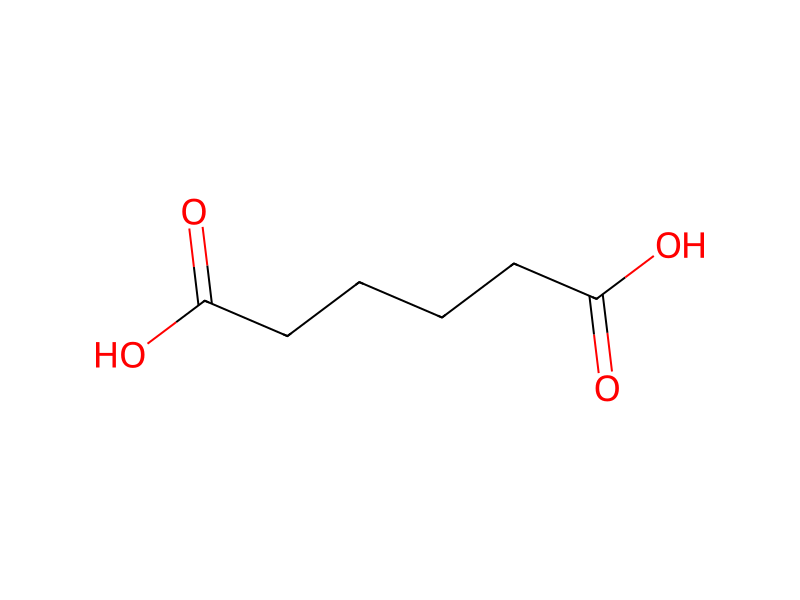
Terephthalic Acid → Adipic Acid
Reaction equation

O[CH2:2][C:3](C)(CO)C.C(O)(=O)[C:9]1[CH:17]=[CH:16][CH:15]=[C:11]([C:12]([OH:14])=[O:13])[CH:10]=1.[C:20]([OH:31])(=[O:30])[C:21]1C=C[C:24]([C:25]([OH:27])=[O:26])=[CH:23][CH:22]=1>>[C:12]([OH:14])(=[O:13])[CH2:11][CH2:15][CH2:16][CH2:17][CH2:9][CH2:10][CH2:2][CH3:3].[C:20]([OH:31])(=[O:30])[CH2:21][CH2:22][CH2:23][CH2:24][C:25]([OH:27])=[O:26]Participants
5



Procedure
Typical polyester resins that can be used are those based on a symmetrical glycol e.g. neopentyl glycol and one or more aromatic dicarboxylic acids e.g. isophthalic acid or terephthalic acid, the acid content optionally additionally being provided by an aliphatic mono or dicarboxylic acid e.g. pelargonic acid, adipic acid or trimellitic anhydride. The polyester should preferably have an acid value of 30-100 mg KOH/g, a melting point of 50°-70° C. and a melt viscosity of 10-14 poise at 200° C. (as measured using an I.C.I. Cone and Plate Viscometer).
Sources & evidence
- ORD record
- ord-5c01e32b00c94d939dd87824040584aa
- Source dataset
- uspto-grants-1985_03
- Patent number
- US04507441
Reaction notes
Loading…