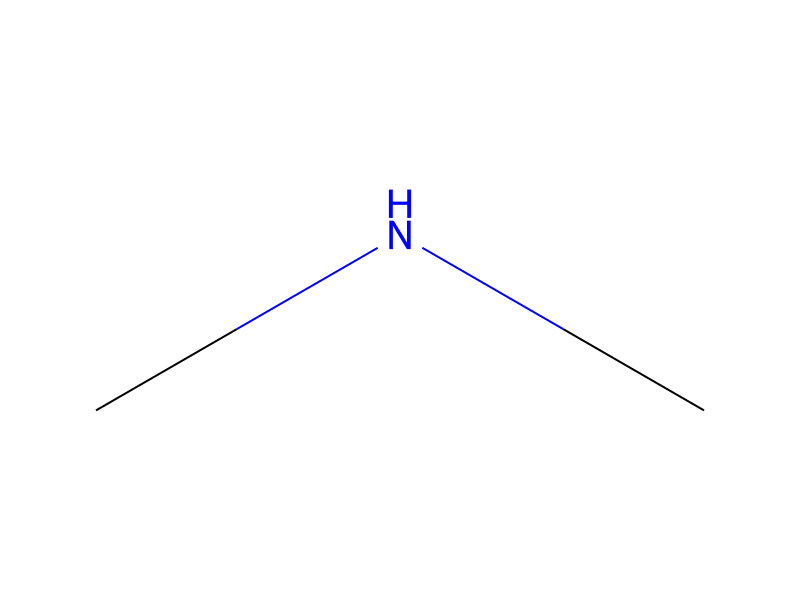
Dimethylamine → N'-(4-Hydroxy-3-nitrophenyl)-N,N-dimethylurea
Reaction equation

[OH:1][C:2]1[CH:7]=[CH:6][C:5]([N:8]=[C:9]=[O:10])=[CH:4][C:3]=1[N+:11]([O-:13])=[O:12].NC1C=CC(O)=C([N+]([O-])=O)C=1.C(Cl)(Cl)=O.[CH3:29][NH:30][CH3:31]>C1(C)C=CC=CC=1>[OH:1][C:2]1[CH:7]=[CH:6][C:5]([NH:8][C:9]([N:30]([CH3:31])[CH3:29])=[O:10])=[CH:4][C:3]=1[N+:11]([O-:13])=[O:12]Participants
6
Reactant 4



Product 1

Reagents, catalysts & solvents 1

Procedure
4-Hydroxy-3-nitrophenylisocyanate (15.5 g), prepared as described by H. Ulrich et al., loc. cit., from 4-amino-2-nitrophenol and phosgene, is added to 100 g of a solution of 29% by weight of dimethylamine in toluene, and the mixture is stirred at room temperature for 2 hours. Evaporation under reduced pressure leaves a residue on recrystallization from water gives N-(4-hydroxy-3-nitrophenyl)-N',N'-dimethylurea, m.pt. 142° C.
Workup
- customEvaporation under reduced pressure
- customleaves a residue
- customon recrystallization from water
Sources & evidence
- ORD record
- ord-4e526c29653c478bb2d3759192241978
- Source dataset
- uspto-grants-1985_03
- Patent number
- US04507445
Reaction notes
Loading…