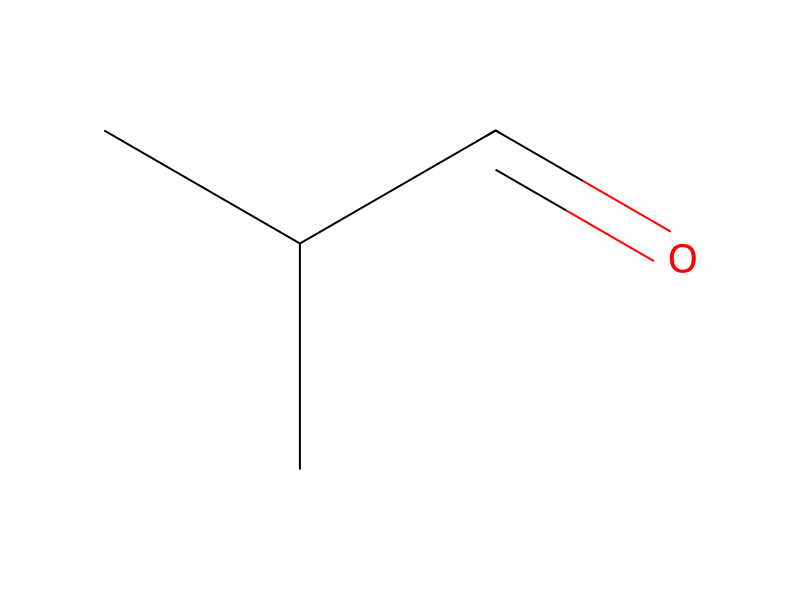
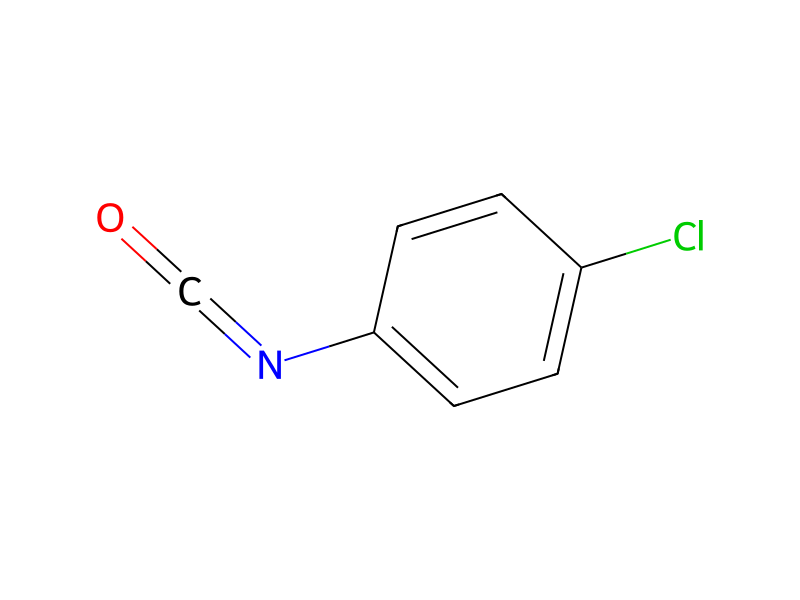
Isobutyraldehyde → N-(4-chlorophenyl)-2,2-dimethyl-3-oxopropanamide
Reaction equation

[Cl:1][C:2]1[CH:7]=[CH:6][C:5]([N:8]=[C:9]=[O:10])=[CH:4][CH:3]=1.[CH:11](=[O:15])[CH:12]([CH3:14])[CH3:13]>>[Cl:1][C:2]1[CH:7]=[CH:6][C:5]([NH:8][C:9](=[O:10])[C:12]([CH3:14])([CH3:13])[CH:11]=[O:15])=[CH:4][CH:3]=1Participants
3

Procedure
p-Chlorophenyl isocyanate (21.08 g) and the morpholinoenamide of isobutyraldehyde (38.7 g) were stirred together in a 100 mL round bottom flask. After an initial exotherm, the solution was allowed to stir at ambient temperature overnight. The excess enamine was then removed in vacuo at 60° C., and the residue was taken up in ether and hexane added. The material was filtered to remove an unwanted urea side product, then the filtrate was washed with dilute HCl, and additional ether was added to redissolve some precipitated product. The organic layer was then dried and concentrated in vacuo to give a solid. Recrystallization furnished 21 g of N-(4-chlorophenyl)-2,2-dimethyl-3-oxopropanamide, m.p. 99°-100° C.
Workup
- customThe excess enamine was then removed in vacuo at 60° C.
- additionhexane added
- filtrationThe material was filtered
- customto remove an unwanted urea side product
- washthe filtrate was washed with dilute HCl, and additional ether
- additionwas added
- dissolutionto redissolve some precipitated product
- customThe organic layer was then dried
- concentrationconcentrated in vacuo
- customto give a solid
- customRecrystallization
Sources & evidence
- ORD record
- ord-3d232fa643f747bcb0b2ab54b7e72ee8
- Source dataset
- uspto-grants-1990_07
- Patent number
- US04944795
Reaction notes
Loading…