Methanesulfonyl chloride → 1-Benzyloxy-4-(2-methanesulfonyloxyethyl)benzene
Reaction equation

[CH3:1][S:2](Cl)(=[O:4])=[O:3].[CH2:6]([O:13][C:14]1[CH:22]=[CH:21][C:17]([CH2:18][CH2:19][OH:20])=[CH:16][CH:15]=1)[C:7]1[CH:12]=[CH:11][CH:10]=[CH:9][CH:8]=1>C(OCC)C.N1C=CC=CC=1>[CH2:6]([O:13][C:14]1[CH:15]=[CH:16][C:17]([CH2:18][CH2:19][O:20][S:2]([CH3:1])(=[O:4])=[O:3])=[CH:21][CH:22]=1)[C:7]1[CH:8]=[CH:9][CH:10]=[CH:11][CH:12]=1Participants
Reactant 2

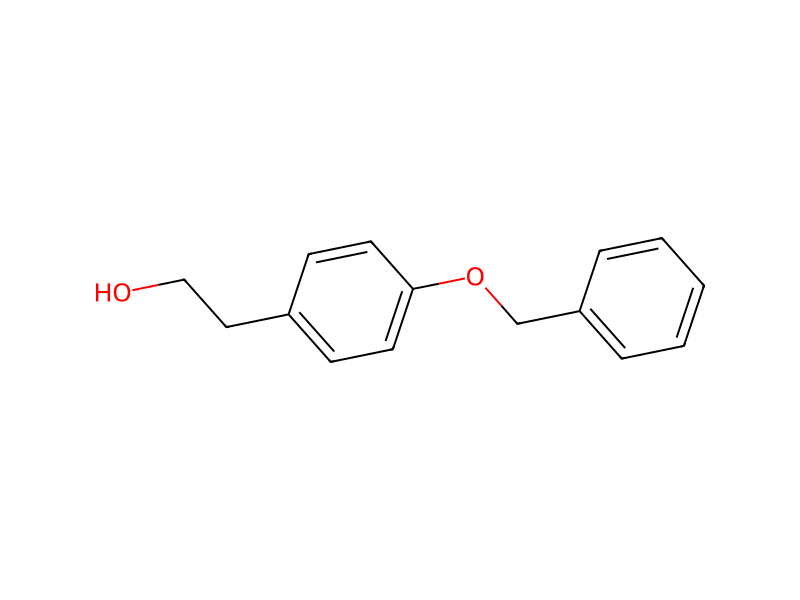
Product 1

Reagents, catalysts & solvents 2


Procedure
A solution of 3.51 g of methanesulfonyl chloride in 5 ml of diethyl ether was added dropwise over a period of 0.5 hour to a stirred solution of 7.0 g of 4-benzyloxyphenethyl alcohol in 20 ml of pyridine at 0° C. Stirring was continued for 2 hours while the mixture was allowed to warm to room temperature: The mixture was then partitioned between 150 ml of 2 N hydrochloric acid and dichloromethane. The organic phase was separated, washed with water, dried over sodium sulfate, filtered, and evaporated. Trituration of the residue with n-hexane brought about crystallization. The crystals were removed by filtration and dried, whereby 8.9 g (95%) of 1-benzyloxy-4-(2-methanesulfonyloxyethyl)benzene having a melting point of 60°-64° C. were obtained.
Workup
- customThe mixture was then partitioned between 150 ml of 2 N hydrochloric acid and dichloromethane
- customThe organic phase was separated
- washwashed with water
- dry with materialdried over sodium sulfate
- filtrationfiltered
- customevaporated
- customTrituration of the residue with n-hexane brought about crystallization
- customThe crystals were removed by filtration
- customdried
Sources & evidence
- ORD record
- ord-1801342002b14f189e774fcc4f155f74
- Source dataset
- uspto-grants-1983_06
- Patent number
- US04387100
Reaction notes
Loading…