Toluene → Ethyl benzoate
Reaction equation

B(O)O.S1C2C(=CC=CC=2)C=CC1.Br[C:15]1[CH:25]=[CH:24][CH:23]=[CH:22][C:16]=1[C:17]([O:19][CH2:20][CH3:21])=[O:18].C1(C)C=CC=CC=1>CO>[CH2:20]([O:19][C:17](=[O:18])[C:16]1[CH:22]=[CH:23][CH:24]=[CH:25][CH:15]=1)[CH3:21]Participants
Reactant 4

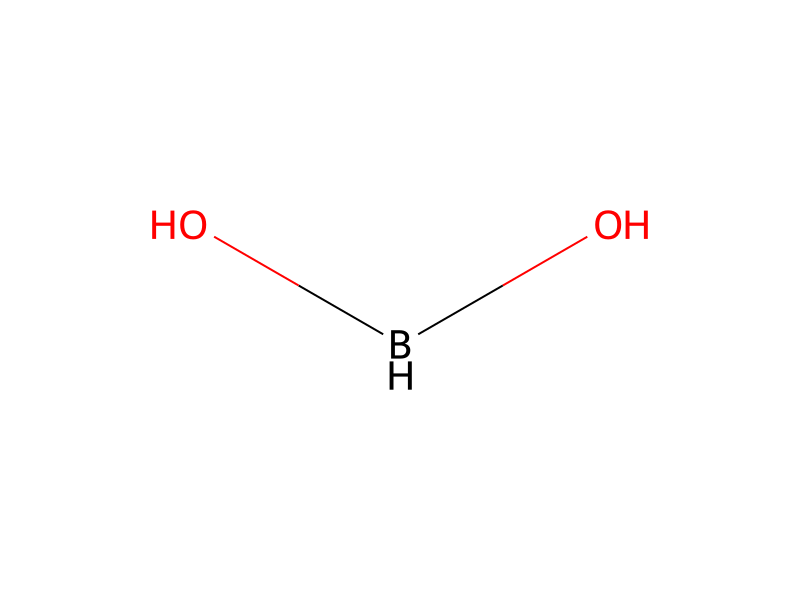


Product 1

Reagents, catalysts & solvents 1

Procedure
As is shown in the reaction scheme, the (2,2-dialkyl-4-alkyl, aryl or heteroaryl-2H-chromen-6-yl) boronic acid compounds of Formula 24 (or their corresponding thiochrom-3-ene analogs) are reacted with ethyl 2-bromobenzoate in the presence of Pd(0) catalyst in an inert solvent or solvent mixture, such as toluene and methanol, to provide 2-(2,2-dialkyl-4-alkyl, aryl or heteroaryl-2H-chromen-6-yl)benzoic acid ethyl ester compounds of Formula 60. The reagent ethyl 2-bromobenzoate is available in accordance with the chemical literature, see for example J. Org. Chem. 14 (1949) 509, 512 and Helv. Chim. Acta 39 (1956) 505-511. Other examples of reagents which can be used in this reaction instead of ethyl 2-bromobenzoate are: ethyl 2-bromopyridine-3-carboxylate, ethyl 4-bromopyridine-3-carboxylate, ethyl 3-bromothiophene-2-carboxylate, ethyl 2-bromothiophene-3-carboxylate, ethyl 3-bromofuran-2-carboxylate, ethyl 2-bromofuran-3-carboxylate, ethyl cis 2-bromo-cyclopentanecarboxylate and ethyl cis 2-bromo-cyclohexanecarboxylate. However, in the ensuing desription the primary emphasis remains on the 1,2 substituted phenylene derivative actually shown in the reaction scheme.
Workup
- customAs is shown in the reaction scheme
Sources & evidence
- ORD record
- ord-155976a5077e4b8dab78d53eeffa3c9f
- Source dataset
- uspto-grants-2002_06
- Patent number
- US06403638B1
Reaction notes
Loading…