Acetic Acid → 4-(4-Phenoxyphenyl)piperidine
Reaction equation

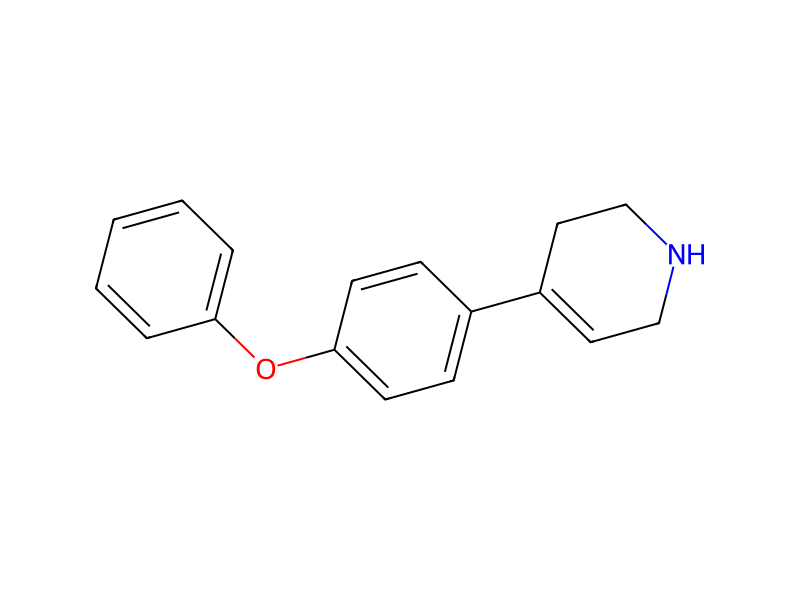
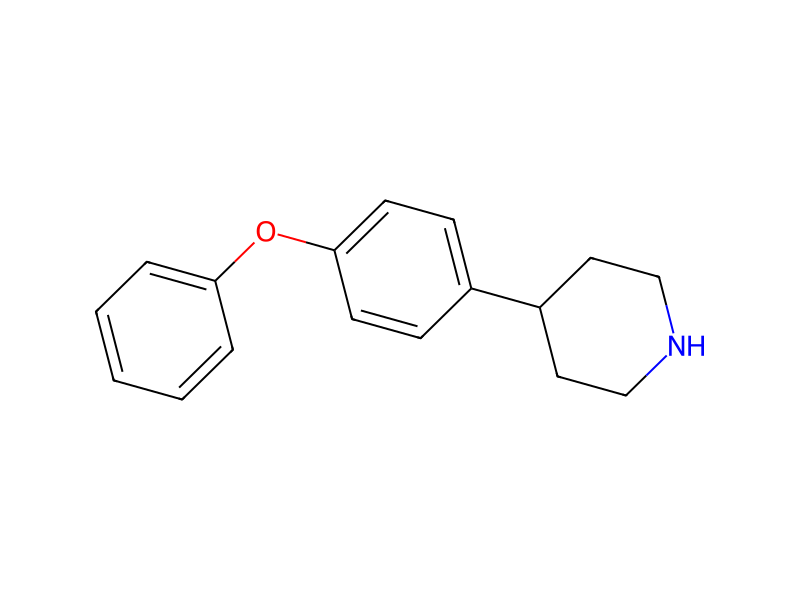
CO.[O:3]([C:10]1[CH:15]=[CH:14][C:13]([C:16]2[CH2:17][CH2:18][NH:19][CH2:20][CH:21]=2)=[CH:12][CH:11]=1)[C:4]1[CH:9]=[CH:8][CH:7]=[CH:6][CH:5]=1.C(O)(=O)C.[OH-].[Na+]>C(Cl)Cl.[C].[Pd]>[O:3]([C:10]1[CH:15]=[CH:14][C:13]([CH:16]2[CH2:21][CH2:20][NH:19][CH2:18][CH2:17]2)=[CH:12][CH:11]=1)[C:4]1[CH:5]=[CH:6][CH:7]=[CH:8][CH:9]=1Participants





Procedure
To an 100 ml methanol solution of 3.51 g of the 4-(4-phenoxyphenyl)-1,2,3,6-tetrahydropyridine synthesized in Step B was added a 200 mg of palladium carbon and 1 ml of acetic acid. The resultant mixture was hydrogenated under atmospheric pressure at room temperature. After completion of the reaction, the insolubles were filtered off and the filtrate was concentrated under reduced pressure. The residue obtained was dissolved in methylene chloride, adjusted by 10% aqueous sodium hydroxide solution to pH=9 to 10, then shaken. The organic layer was dried, filtered, then concentrated under reduced pressure to give a residue, which was then purified by silica gel column chromatography (methylene chloride:methanol=20:1) to give the above-referenced compound, 4-(4-phenoxyphenyl)piperidine in an amount of 2.32 g (yield 66%).
Workup
- customwas hydrogenated under atmospheric pressure at room temperature
- customAfter completion of the reaction
- filtrationthe insolubles were filtered off
- concentrationthe filtrate was concentrated under reduced pressure
- customThe residue obtained
- customThe organic layer was dried
- filtrationfiltered
- concentrationconcentrated under reduced pressure
- customto give a residue, which
- customwas then purified by silica gel column chromatography (methylene chloride:methanol=20:1)
Sources & evidence
- ORD record
- ord-ffa7aac47b184815b6fe7a14c1acc5b0
- Source dataset
- uspto-grants-2002_06
- Patent number
- US06407099B1
Reaction notes
Loading…