Sodium Hydroxide → 1-(3-Bromopropyl)-4-chlorobenzene
Reaction equation

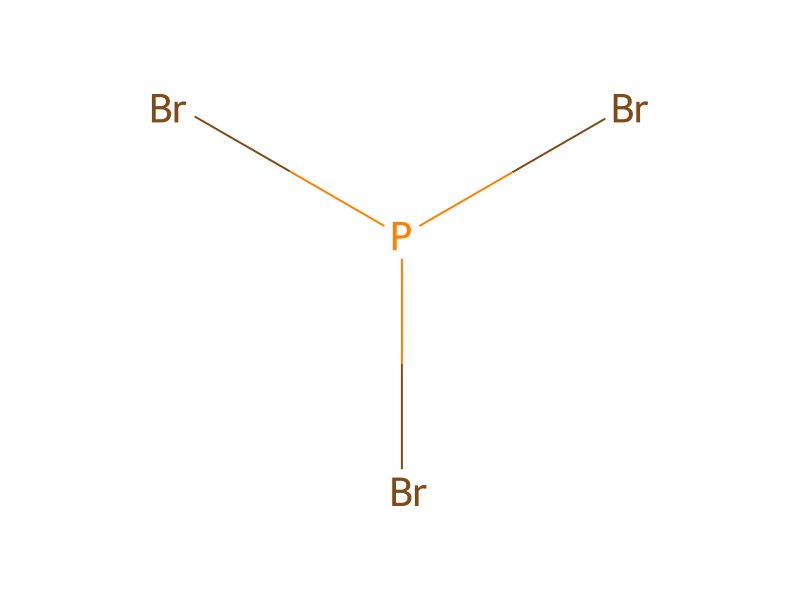
[Cl:1][C:2]1[CH:7]=[CH:6][C:5]([CH2:8][CH2:9][CH2:10]O)=[CH:4][CH:3]=1.P(Br)(Br)[Br:13].[OH-].[Na+]>C1(C)C=CC=CC=1>[Cl:1][C:2]1[CH:7]=[CH:6][C:5]([CH2:8][CH2:9][CH2:10][Br:13])=[CH:4][CH:3]=1Participants
Reactant 3


Product 1

Reagents, catalysts & solvents 1

Conditions
- Temperature
- 90 °C
Procedure
66.0 g (387 mmol) of 3-(p-chlorophenyl)-1-propanol was dissolved in 350 ml of toluene, and a solution having 105 g (387 mmol) of phosphorus tribromide dissolved in 50 ml of toluene, was dropwise added thereto. After the dropwise addition, the internal temperature of the reaction solution was raised to 90° C. and returned to room temperature 3 hours later. 250 ml of a 1N sodium hydroxide aqueous solution was added thereto, followed by shaking. Then, the solution was left to stand still for liquid separation, and the water layer was extracted again with 150 ml of toluene. The toluene layers were put together and washed with 150 ml of a saturated sodium chloride aqueous solution, followed by Celite filtration, and then the solvent was distilled off. The residue was Idistilled to obtain 75.2 g (y 83%) of the desired 3-(p-chlorophenyl)-1-propyl bromide {compound (2)) as a colorless oily substance (85-89° C./0.3 mmHg)
Workup
- additionwas dropwise added
- additionAfter the dropwise addition
- waitThen, the solution was left
- customto stand still for liquid separation
- extractionthe water layer was extracted again with 150 ml of toluene
- washwashed with 150 ml of a saturated sodium chloride aqueous solution
- filtrationfollowed by Celite filtration
- distillationthe solvent was distilled off
Sources & evidence
- ORD record
- ord-bb4a7f7f26c0448593d3534100c58db1
- Source dataset
- uspto-grants-2002_06
- Patent number
- US06407298B1
Reaction notes
Loading…