Pyridine → Cyanoacetamide
Reaction equation

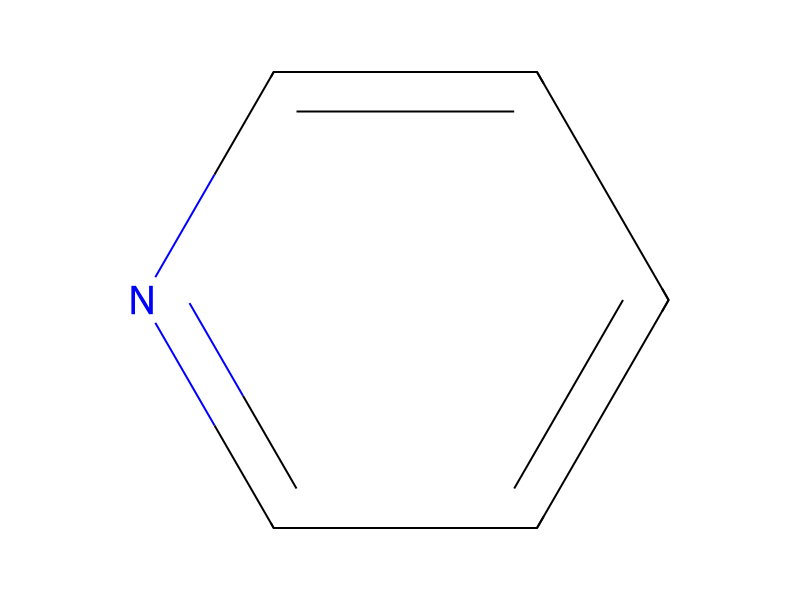
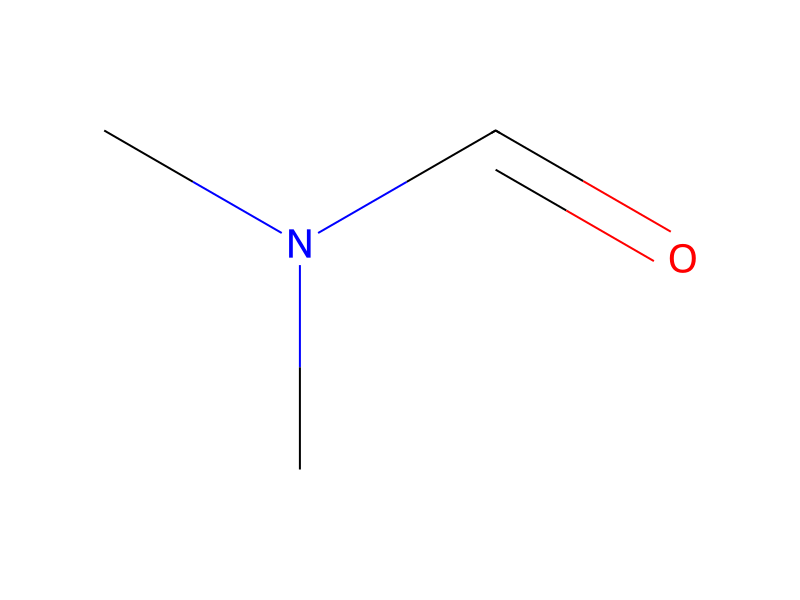
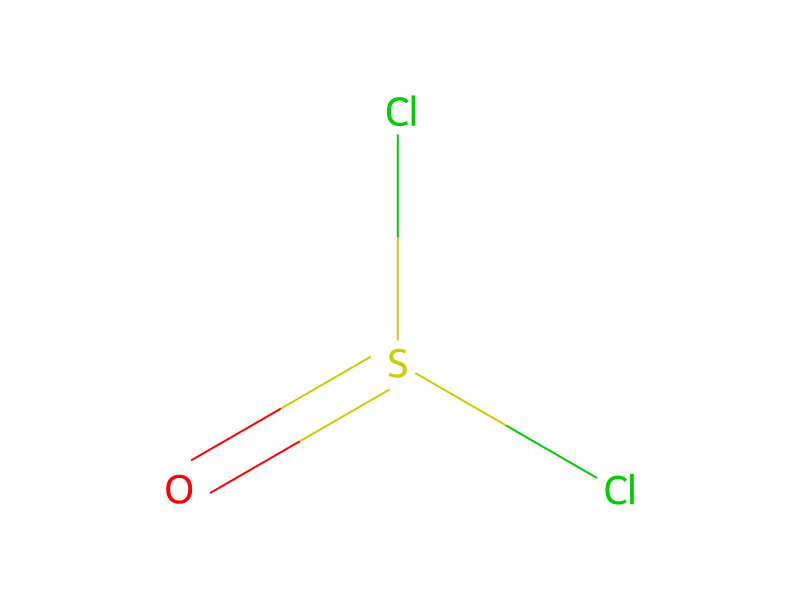
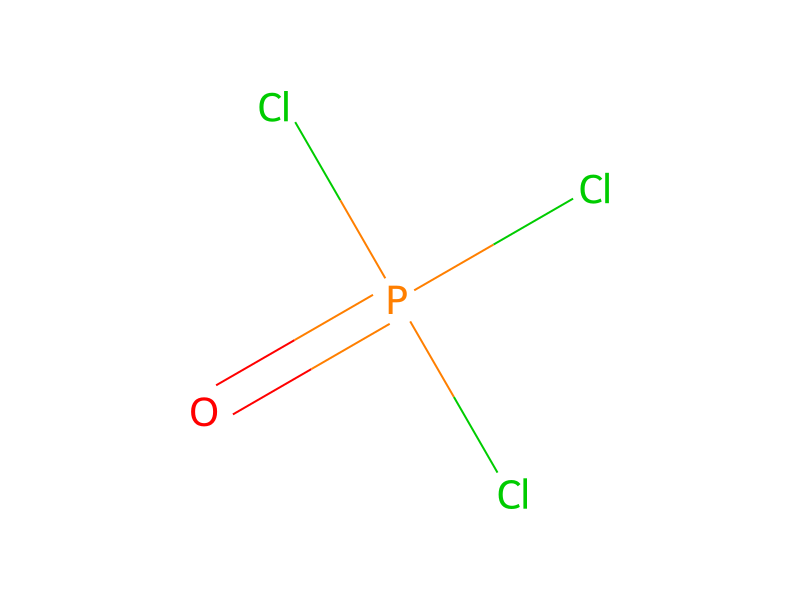
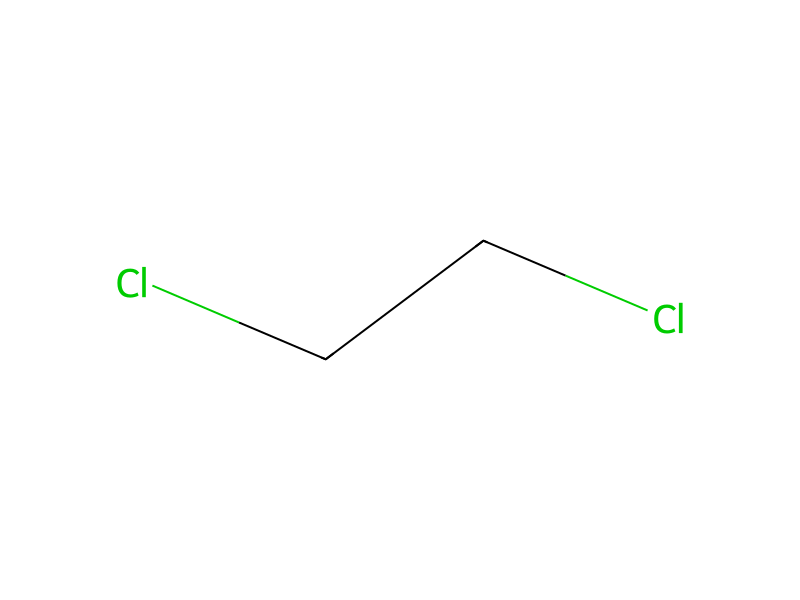
S(Cl)(Cl)=O.[P:5]([Cl:9])([Cl:8])([Cl:7])=[O:6].FC(F)(F)C(O[C:15](=[O:20])[C:16](F)(F)F)=O.C[N:24]([CH:26]=[O:27])C.[N:28]1C=CC=[CH:30][CH:29]=1>C(Cl)CCl.C1C=CC=CC=1>[C:29]([CH2:30][C:26]([NH2:24])=[O:27])#[N:28].[O:6]=[P:5]([Cl:9])([Cl:8])[Cl:7].[C:16](#[N:24])[CH:15]([CH2:30][C:29]#[N:28])[OH:20]Participants
Reactant 5

Product 3


Reagents, catalysts & solvents 2

Procedure
These include commercial scale processes using thionyl chloride (SOCl2), phosphorous oxychloride (POCl3) or trifluoroacetic acid anhydride (TFAA) in solvents such as DMF and pyridine to convert the carboxamide to the corresponding nitrile (see Table 1). For instance, dehydration of cyanoacetamide with POCl3 in ethylene dichloride or benzene produces malonitrile in 70-80% yield (see, Surrey, et al., U.S. Pat. No. 2,389,217). However, the commercial dehydration of carboxamide substituents on nitrogen-containing heteroaryl compounds using these methods presents serious challenges. Most notable is general insolubility of these starting materials in solvents compatible with the dehydrating agents and by-products formation. For instance, dehydration of 5-amino-4-carboxamido-1,2,3-triazole with POCl3 in DMF requires protection of the 5-amino group and the 1-N of the triazole to effect the dehydration in 60% yield (see Mattzinger, et al., U.S. Pat. No. 4,619,991). Likewise dehydration of 4(5)-imidazole-carboxamide uses dichlorophenylphosphine oxide as a dehydrating agent to give 4-cyanoimidazole (see Leone-Bay and Glaser Syn. Comm. 17(12): 1409-12 (1987)). Dichlorophenylphosphine oxide is not readily available and is relatively expensive. Finally, dehydration of pyrazineamide uses neat phosphoryl chloride as a dehydrating agent to give 2-cyanopyrazine (see, Johnston U.S. Pat. No. 4,442,097). No solvent is used.
Sources & evidence
- ORD record
- ord-a3720fefd3eb4900b5616366daff72f0
- Source dataset
- uspto-grants-2012_06
- Patent number
- US08198461B2
Reaction notes
Loading…