Butyric Acid → Beta-Isophorone
Reaction equation

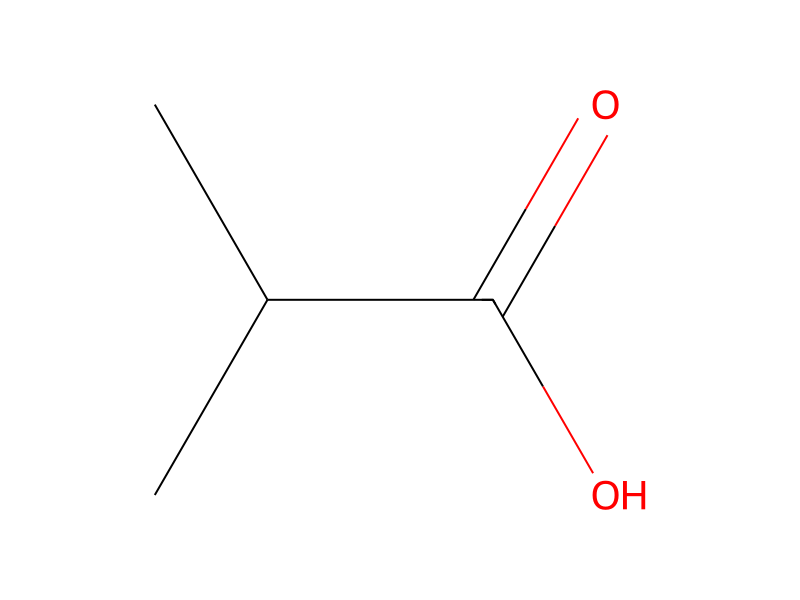
[CH2:1]([C:5]([CH2:7][CH:8]([CH3:10])[CH3:9])=[O:6])[CH:2]([CH3:4])[CH3:3].C(O)(=O)C(C)C.C(O)(=O)CC(C)C.C(O)(=O)CCCC.C(O)(=O)CCC>C(O)(=O)C.C(O)=O>[CH3:9][C:8]1[CH2:7][C:5](=[O:6])[CH2:1][C:2]([CH3:4])([CH3:3])[CH:10]=1Participants
8
Reactant 5



Product 1

Reagents, catalysts & solvents 2


Procedure
The source of the acid component cannot be determined exactly, but it may be ascribed to something decomposed in the oxidation reaction procedure. For example, the acid component may be ascribed to the solvent (e.g., diisobutyl ketone) decomposed in the oxidation reaction (e.g., decomposed into a C1-10carboxylic acid, such as formic acid, acetic acid, isobutyric acid, isovaleric acid), or to a by-product (e.g., valeric acid, butyric acid) produced in the step of forming the starting material β-isophorone derivative (isomerization step of α-isophorone).
Workup
- customdecomposed in the oxidation reaction procedure
- customdecomposed in the oxidation reaction (e.g.
- customproduced in the step
Sources & evidence
- ORD record
- ord-1489a864631d44a7ab46a877ac1936e8
- Source dataset
- uspto-grants-2002_06
- Patent number
- US06410797B1
Reaction notes
Loading…