(2-Fluoro-5-propoxyphenyl)boronic acid → 3-Amino-6-(2-fluoro-5-propoxyphenyl)picolinic acid
Reaction equation

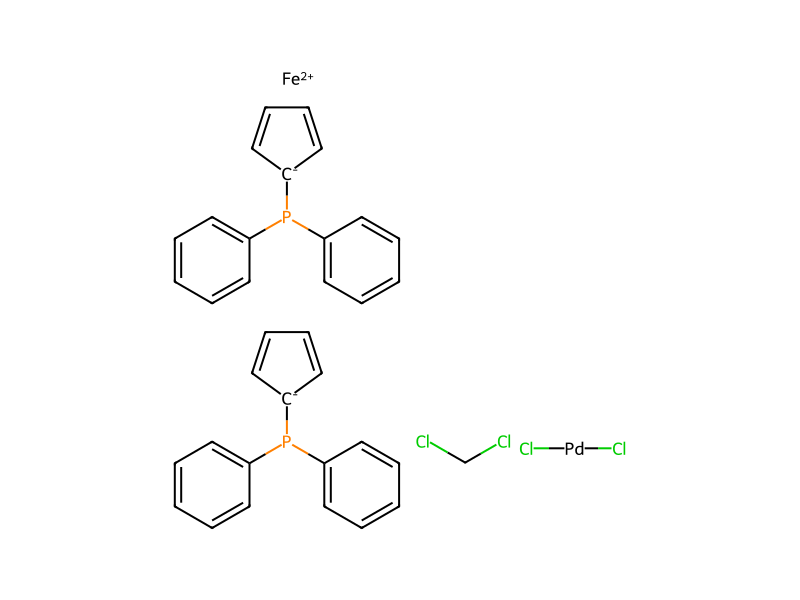
[NH2:1][C:2]1[C:3]([C:9]([OH:11])=[O:10])=[N:4][C:5](Br)=[CH:6][CH:7]=1.[F:12][C:13]1[CH:18]=[CH:17][C:16]([O:19][CH2:20][CH2:21][CH3:22])=[CH:15][C:14]=1B(O)O>C1C=CC(P(C2C=CC=CC=2)[C-]2C=CC=C2)=CC=1.C1C=CC(P(C2C=CC=CC=2)[C-]2C=CC=C2)=CC=1.Cl[Pd]Cl.[Fe+2].C(Cl)Cl>[NH2:1][C:2]1[C:3]([C:9]([OH:11])=[O:10])=[N:4][C:5]([C:18]2[CH:17]=[C:16]([O:19][CH2:20][CH2:21][CH3:22])[CH:15]=[CH:14][C:13]=2[F:12])=[CH:6][CH:7]=1Participants
4


Procedure
Method 1 was followed using 3-amino-6-bromopicolinic acid (1.0 equiv.) and 2-fluoro-5-propoxyphenylboronic acid (1.5 equiv.) and Pd(dppf)Cl2-DCM (0.05 equiv.) to give 3-amino-6-(2-fluoro-5-propoxyphenyl)picolinic acid in 75% yield. LC/MS=291.0 (M+H), Rt=0.81 min.
Sources & evidence
- ORD record
- ord-ed1575b1624c4e229fe4c06d86596fab
- Source dataset
- uspto-grants-2012_12
- Patent number
- US08329732B2
Reaction notes
Loading…