Binol → (-)-Isopulegol
Reaction equation

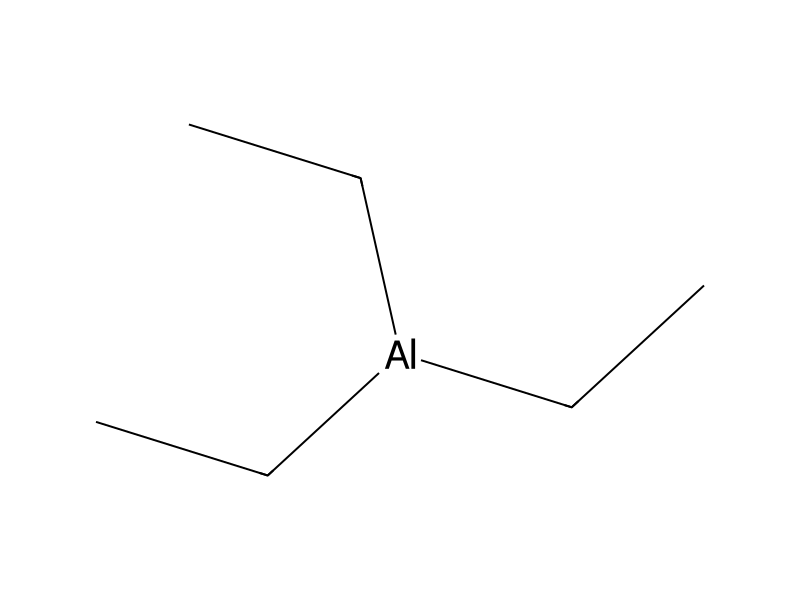
C1C=C2C=C[C:9](O)=[C:10]([C:11]3[C:20]4[C:15](=CC=CC=4)[CH:14]=[CH:13][C:12]=3[OH:21])[C:4]2=CC=1.[CH2:23]([Al](CC)CC)C>C1(C)C=CC=CC=1>[CH3:23][C@H:14]1[CH2:13][C@@H:12]([OH:21])[C@H:11]([C:10]([CH3:9])=[CH2:4])[CH2:20][CH2:15]1Participants


Reagents, catalysts & solvents 1

Procedure
In a 300-ml reaction flask, 2.29 g (8.0 mmol) of (R)-1,1′-bi-2-naphthol was placed and the air in the flask was replaced with nitrogen gas. Then, 116 ml of toluene and 5 ml (5.0 mmol) of a toluene solution of triethylaluminum (1.0 mol/L) were successively added thereto and the mixture was stirred at room temperature for 1 hour, to give a catalyst solution. After the catalyst solution was cooled to a temperature of 0 to 5° C., 38.6 g (250 mmol) of d-citronellal was slowly added dropwise thereto, and the mixture was stirred at a temperature of 0 to 5° C. for 9 hours. After completion of the reaction, the reaction mixture was concentrated in vacuo, and continuously toluene was distilled off at a temperature of 110 to 115° C. at a pressure of 2.93 to 3.33 kPa (22 to 25 mmHg), to give 31.0 g of the objective l-isopulegol at the yield of 80.3%. The GC analysis results show that the purity was 99.0% and that the ratio of l-isopulegol to the other isomers was 98.7:1.3.
Workup
- customto give a catalyst solution
- additionwas slowly added dropwise
- stirringthe mixture was stirred at a temperature of 0 to 5° C. for 9 hours
- customAfter completion of the reaction
- concentrationthe reaction mixture was concentrated in vacuo, and continuously toluene
- distillationwas distilled off at a temperature of 110 to 115° C. at a pressure of 2.93 to 3.33 kPa (22 to 25 mmHg)
Sources & evidence
- ORD record
- ord-76968df5278a43e4b4230f59efbf04c2
- Source dataset
- uspto-grants-2012_12
- Patent number
- US08329930B2
Reaction notes
Loading…