5,6,7,8-Tetrahydro-1-naphthalenecarboxylic acid → 135729-78-1
Reaction equation

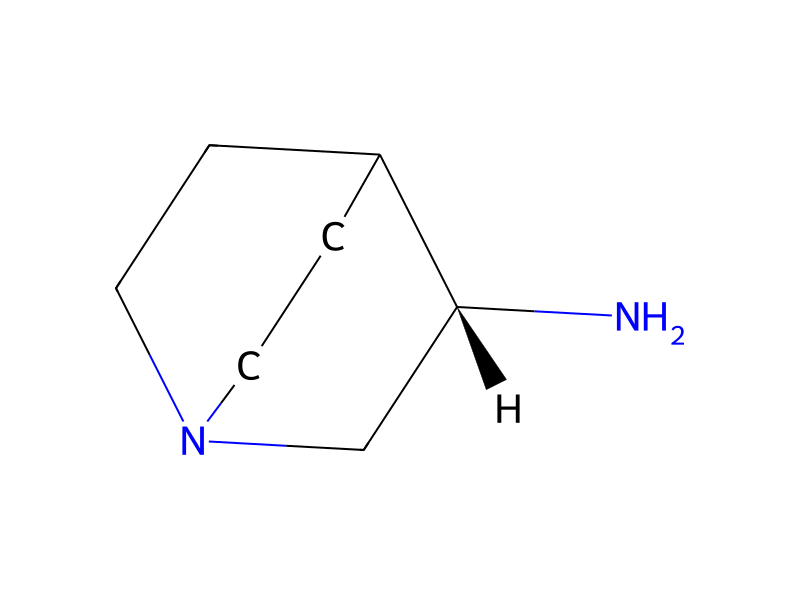
[CH:1]1[CH:6]=[C:5]2[C:7]([N:9]([C@H:15]3[CH:20]4[CH2:21][CH2:22][N:17]([CH2:18][CH2:19]4)[CH2:16]3)C[C@H:11]3[CH2:12][CH2:13][CH2:14][C:3](=[C:4]23)[CH:2]=1)=[O:8].C1(C(O)=O)C2CCCCC=2C=CC=1.N[C@H]1C2CCN(CC2)C1>>[N:17]12[CH2:18][CH2:19][CH:20]([CH2:21][CH2:22]1)[C@H:15]([NH:9][C:7]([C:5]1[C:4]3[CH2:11][CH2:12][CH2:13][CH2:14][C:3]=3[CH:2]=[CH:1][CH:6]=1)=[O:8])[CH2:16]2Participants



Procedure
The synthetic route for preparing palonosetron is described in U.S. Pat. No. 5,202,333, wherein 5,6,7,8-tetrahydro-1-naphthalenecarboxylic acid (Compound II) is reacted with (S)-3-amino-1-azabicyclo[2.2.2]octane (Compound III) to obtain (S)—N-(1-azabicyclo-[2.2.2]oct-3-yl)-5,6,7,8-tetrahydro-1-naphthalenecarboxamide (Compound IV), which is recrystallized from a mixture of ethyl acetate and hexane. Reaction of Compound IV with n-butyl lithium in hexane in presence of dimethylformamide (DMF) affords (S)-2-(1-azabicyclo-[2.2.2]oct-3-yl)-2,4,5,6-tetrahydro-1H-benz[de]isoquinolin-1-one (Compound V), and treatment of Compound V using palladium hydroxide on carbon with hydrogen affords a diastereomeric mixture containing 98.9% of Compound A. This process is depicted in Scheme 1 below.
Sources & evidence
- ORD record
- ord-914399955893416e9204c5f5afbea68a
- Source dataset
- uspto-grants-2012_12
- Patent number
- US08334388B2
Reaction notes
Loading…