N-propylsulfamoyl chloride → methyl 2,6-difluoro-3-(N-propylsulfamoylamino)benzoate
Reaction equation

[CH2:1]([NH:4][S:5](Cl)(=[O:7])=[O:6])[CH2:2][CH3:3].[NH2:9][C:10]1[C:11]([F:21])=[C:12]([C:17]([F:20])=[CH:18][CH:19]=1)[C:13]([O:15][CH3:16])=[O:14]>C(Cl)Cl>[F:21][C:11]1[C:10]([NH:9][S:5](=[O:7])(=[O:6])[NH:4][CH2:1][CH2:2][CH3:3])=[CH:19][CH:18]=[C:17]([F:20])[C:12]=1[C:13]([O:15][CH3:16])=[O:14]Participants
4
Reactant 2
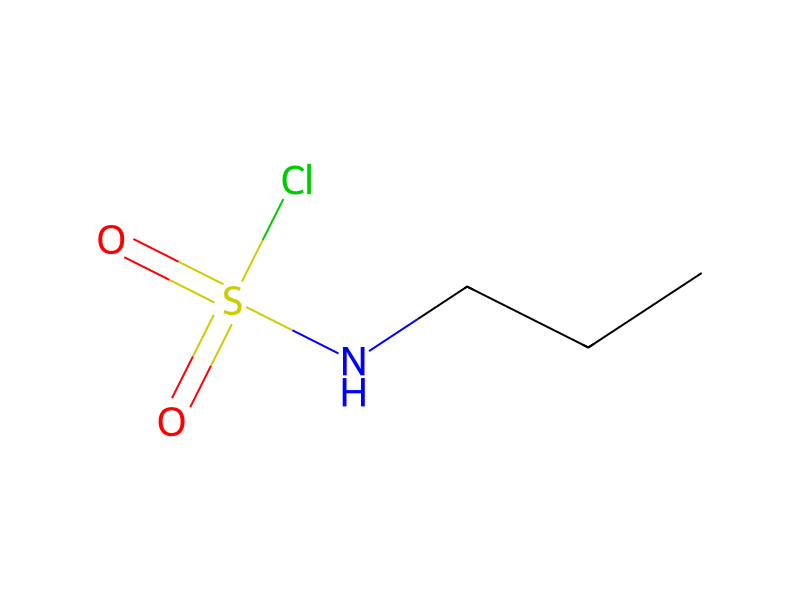

Product 1

Reagents, catalysts & solvents 1

Procedure
Propylsulfamoyl chloride (0.379 mL, 2.40 mmol) was added to methyl 3-amino-2,6-difluorobenzoate (0.150 mL, 0.802 mmol), TEA (0.335 mL, 2.40 mmol) in DCM (1.5 mL) at 0° C. The solution was allowed to warm to room temperature overnight. The solids were filtered, and the supernate was concentrated to provide crude methyl 2,6-difluoro-3-(N-propylsulfamoylamino)benzoate, which was used directly in next step.
Workup
- filtrationThe solids were filtered
- concentrationthe supernate was concentrated
Sources & evidence
- ORD record
- ord-0cee5fdaea96465c824ca1e754e88bdd
- Source dataset
- uspto-grants-2012_12
- Patent number
- US08338452B2
Reaction notes
Loading…