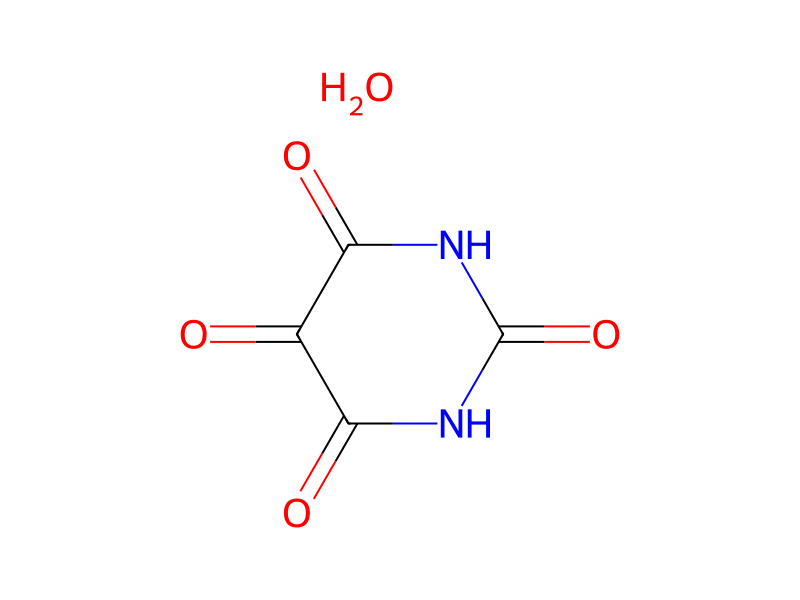
2,4,5,6(1H,3H)-Pyrimidinetetrone, monohydrate → HCID 178514109, compound
Reaction equation

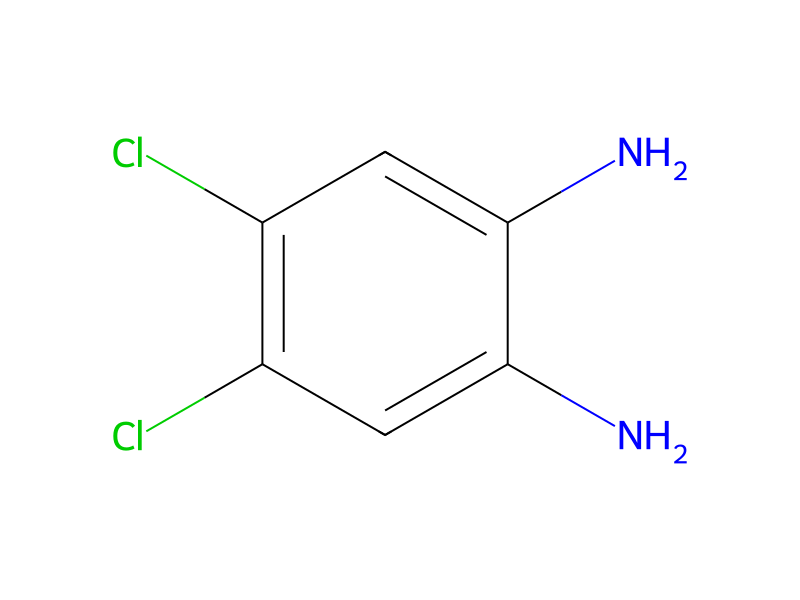
[Cl:1][C:2]1[C:7]([Cl:8])=[CH:6][C:5]([NH2:9])=[C:4]([NH2:10])[CH:3]=1.O.[NH:12]1[C:20](=[O:21])[C:18](=O)[C:16](=[O:17])[NH:15][C:13]1=[O:14]>C(O)(=O)C>[Cl:1][C:2]1[CH:3]=[C:4]2[C:5](=[CH:6][C:7]=1[Cl:8])[N:9]=[C:16]([OH:17])[C:18]([C:20]([NH:12][C:13]([NH2:15])=[O:14])=[O:21])=[N:10]2Participants
4
Reactant 2
Product 1

Reagents, catalysts & solvents 1

Procedure
A mixture of 4,5-dichloro-o-phenylenediamine (36.2 mmole) and alloxan monohydrate (36.2 mmole) in 10% aqueous acetic acid was stirred at room temperature for a period of 2 hours. Concentration of the reaction mixture gave N-(6,7-dichloro-2-hydroxy-3-quinoxalinoyl)urea which was added to 50% aqueous sulfuric acid and the mixture was heated at a temperature of 135° C. for a period of 3 hours. After cooling the precipitated material was collected by filtration, washed with water and then was slowly added to a 5% aqueous solution of sodium bicarbonate. The insoluble material was collected by filtration and was washed successively with water and ethanol to give 6,7-dichloro-2-hydroxyquinoxaline.
Sources & evidence
- ORD record
- ord-1bbaeaf2af34495b80f2747bc3d55449
- Source dataset
- uspto-grants-1982_11
- Patent number
- US04358307
Reaction notes
Loading…