Ammonia → HCID 13056027, compound
Reaction equation

O=[C:2]1[CH2:7][CH2:6][N:5]([CH2:8][CH2:9][CH2:10][N:11]2[C:15]3[CH:16]=[CH:17][CH:18]=[CH:19][C:14]=3[NH:13][C:12]2=[O:20])[CH2:4][CH2:3]1.[CH3:21][N:22]1[C:30]2[C:25](=[CH:26][CH:27]=[CH:28][CH:29]=2)[CH:24]=[CH:23]1.P(=O)(O)(O)O.N>C(O)(=O)C>[CH3:21][N:22]1[C:30]2[C:25](=[CH:26][CH:27]=[CH:28][CH:29]=2)[C:24]([CH:2]2[CH2:7][CH2:6][N:5]([CH2:8][CH2:9][CH2:10][N:11]3[C:15]4[CH:16]=[CH:17][CH:18]=[CH:19][C:14]=4[NH:13][C:12]3=[O:20])[CH2:4][CH2:3]2)=[CH:23]1Participants
Reactant 4


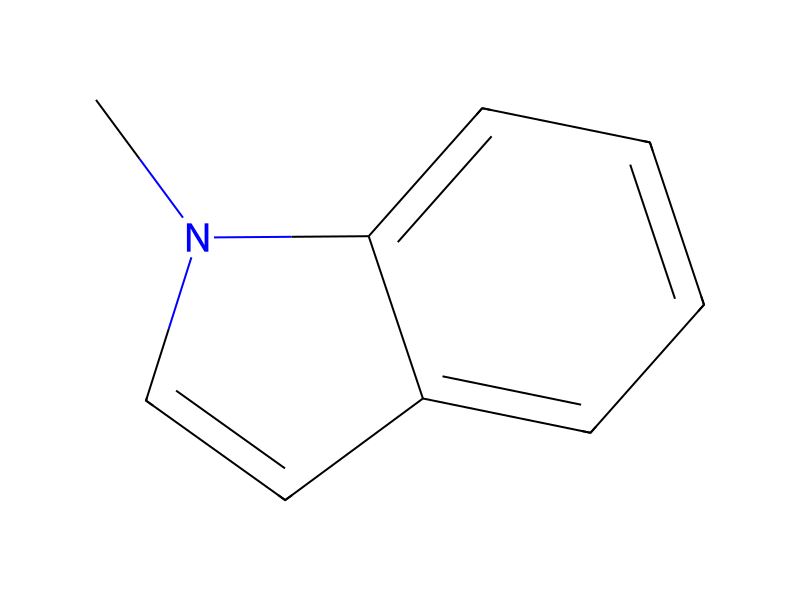

Product 1

Reagents, catalysts & solvents 1

Procedure
A mixture consisting of 2.7 gm of N-[3-(4-oxo-piperidino)-propyl]-benzimidazolone, 1.3 gm of 1-methylindole, 40 ml of acetic acid and 10 ml of 2 N phosphoric acid was allowed to stand at 20° C. for 6 days. Thereafter, the reaction mixture was poured into a mixture of ice and ammonia, the aqueous mixture was extracted with ethyl acetate, and the extract solution was dried and evaporated in vacuo to dryness. The residue was purified by chromatography on silica, using methylene chloride/methanol/ammonia=90/9/1 as the eluant. The main fraction was hydrogenated without characterization as described in Example 1, and the end product was crystallized from ethanol, yielding 2.4 gm (62% of theory) of the compound of the formula ##STR14## having a melting point of 180° C.
Workup
- extractionthe aqueous mixture was extracted with ethyl acetate
- customthe extract solution was dried
- customevaporated in vacuo to dryness
- customThe residue was purified by chromatography on silica
- customthe end product was crystallized from ethanol
- customyielding 2.4 gm (62% of theory) of the compound of the formula
Sources & evidence
- ORD record
- ord-877f600815624a71bee134eec044f646
- Source dataset
- uspto-grants-1982_11
- Patent number
- US04359468
Reaction notes
Loading…