Propylene Oxide → HCID 86737985, compound
Reaction equation

[CH2:1]=[CH:2][CH:3]=[CH2:4].[CH2:5]1O[CH:6]1[CH3:7].[C:9]1(=[O:16])[O:15][CH2:14][CH2:13][CH2:12][CH2:11][CH2:10]1>C1CCCCC1>[CH2:1]=[CH:2][CH:3]=[CH2:4].[CH2:7]=[CH:6][C:5]1[CH:13]=[CH:12][CH:11]=[CH:10][CH:9]=1.[C:9]1(=[O:16])[O:15][CH2:14][CH2:13][CH2:12][CH2:11][CH2:10]1Participants
Reactant 3


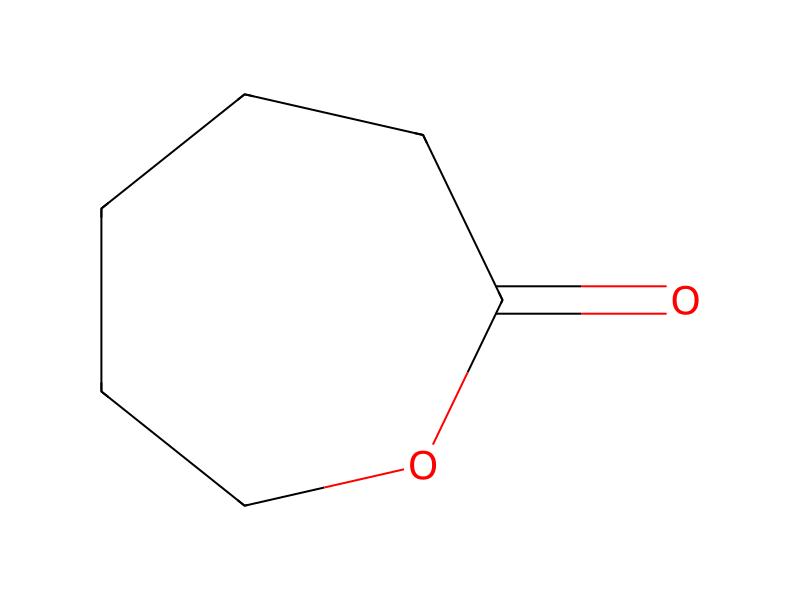
Product 1

Reagents, catalysts & solvents 1

Procedure
Cyclohexane was charged to a 26-oz. beverage bottle equipped with a perforated Crown cap over a self-sealing rubber gasket, and the bottle and cyclohexane were then purged with nitrogen. Styrene and tetrahydrofuran and then the n-butyllithium were added. The temperature was adjusted to 70° C. and the bottle and its contents were tumbled in a constant temperature bath for 20 minutes, after which time the styrene polymerization was essentially complete. 1,3-Butadiene was then charged to the bottle and the polymerization was continued for one hour with continued agitation at 70° C. At the end of this time, polymerization of the butadiene was essentially complete. Propylene oxide was then added to the polymerization reaction mixture and the mixture was agitated for 10 minutes while the temperature was reduced from 70° C. to 30° C. Epsilon-caprolactone was added and polymerization proceeded for 10 minutes with continued agitation. Promptly 10 minutes after the epsilon-caprolactone had been charged, the polymerization reaction was terminated by adding the chosen terminating agent. The reaction mixture and added terminating agent were thoroughly mixed by shaking the beverage bottle to insure quantitative termination of all polymer lithium. One part of 2,6-di-t-butyl-4-methylphenol per hundred parts of total monomer was added as a 10 weight percent solution in 50:50 toluene:isopropanol. The contents of the bottle were emptied into a beaker, and the styrene-butadiene-epsilon-caprolactone block terpolymer was isolated by steam stripping. The recovered polymer was dried at 60° C. for about 15 hours under reduced pressure. Block polycaprolactone was determined for each polymer by an oxidative degradation method as described in Footnote (b) of Table II.
Workup
- customequipped with a perforated Crown
- customcap over a self-sealing rubber gasket
- customthe bottle and cyclohexane were then purged with nitrogen
- additionStyrene and tetrahydrofuran and then the n-butyllithium were added
- customwas adjusted to 70° C.
- customafter which time the styrene polymerization
- waitthe polymerization was continued for one hour with continued agitation at 70° C
- customwas reduced from 70° C. to 30° C
- custompolymerization
- waitproceeded for 10 minutes with continued agitation
- customthe polymerization reaction
- customwas terminated
- additionby adding the
- customchosen terminating agent
- additionThe reaction mixture and added
- customterminating agent
- additionwere thoroughly mixed
- stirringby shaking the beverage bottle
- additionOne part of 2,6-di-t-butyl-4-methylphenol per hundred parts of total monomer was added as a 10 weight percent solution in 50:50 toluene
Sources & evidence
- ORD record
- ord-6c7a875fb8554771a5dd9fda9abed9be
- Source dataset
- uspto-grants-1982_11
- Patent number
- US04360643
Reaction notes
Loading…