Water → 5-Bromo-2-[2-(4-benzyl-1-piperazinyl)ethyl]-1-methyl-1H-naphth[1,2-d]imidazole
Reaction equation

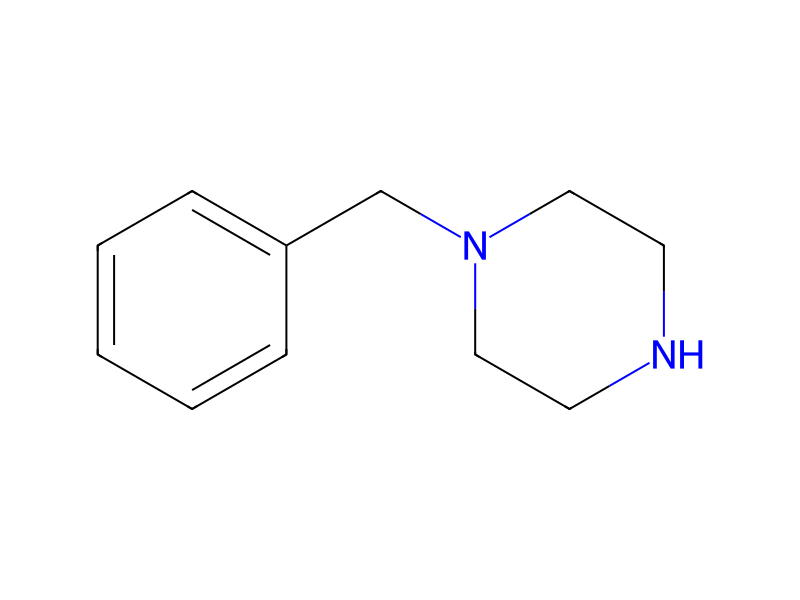
[CH2:1]([N:8]1[CH2:13][CH2:12][NH:11][CH2:10][CH2:9]1)[C:2]1[CH:7]=[CH:6][CH:5]=[CH:4][CH:3]=1.Cl.[Br:15][C:16]1[C:32]2[C:27](=[CH:28][CH:29]=[CH:30][CH:31]=2)[C:19]2[N:20]([CH3:26])[C:21]([CH2:23][CH2:24]Cl)=[N:22][C:18]=2[CH:17]=1.[OH-].[Na+].O>CO>[Br:15][C:16]1[C:32]2[C:27](=[CH:28][CH:29]=[CH:30][CH:31]=2)[C:19]2[N:20]([CH3:26])[C:21]([CH2:23][CH2:24][N:11]3[CH2:12][CH2:13][N:8]([CH2:1][C:2]4[CH:3]=[CH:4][CH:5]=[CH:6][CH:7]=4)[CH2:9][CH2:10]3)=[N:22][C:18]=2[CH:17]=1Participants
6





Procedure
4 cc (0.022 mole) of 1-benzylpiperazine is added to a solution of 7.2 g (0.02 mole) of 5-bromo-2-(2-chloroethyl)-1-methyl-1H-naphth[1,2-d]imidazole hydrochloride and 40 cc (0.04 mole) of 1 N NaOH in 100 cc of hot methanol, and the obtained reaction mixture is heated under an argon atmosphere at reflux temperature for several hours. When the reaction, which is followed by thin layer chromatography, is completed, the solvent is boiled off and the obtained residue is taken up with a small amount of water, filtered and dried. Yield 8.87 g. M.p. 155°-157° C.
Workup
- customthe obtained reaction mixture
- temperatureis heated under an argon atmosphere
- temperatureat reflux temperature for several hours
- customWhen the reaction, which
- filtrationfiltered
- customdried
Sources & evidence
- ORD record
- ord-14bd25cf84094a16914a26cd72832edd
- Source dataset
- uspto-grants-1982_11
- Patent number
- US04360674
Reaction notes
Loading…