(Bis(2-methoxyethyl)amino)sulfur trifluoride → HCID 178510877, compound
Reaction equation

O[CH2:2][CH2:3][C:4]1[N:9]=[C:8]([C:10]([F:13])([F:12])[F:11])[N:7]=[C:6]([O:14][C@@H:15]2[CH2:20][CH2:19][C@H:18]([N:21]3[CH2:24][C:23]([CH2:47][C:48]#[N:49])([N:25]4[CH:29]=[C:28]([C:30]5[C:31]6[CH:38]=[CH:37][N:36](COCC[Si](C)(C)C)[C:32]=6[N:33]=[CH:34][N:35]=5)[CH:27]=[N:26]4)[CH2:22]3)[CH2:17][CH2:16]2)[CH:5]=1.C[O:51]CCN(CCOC)S(F)(F)[F:56].CC#N.[OH2:66]>C(Cl)Cl>[F:11][C:10]([F:13])([F:12])[C:8]([OH:51])=[O:66].[F:11][C:10]([F:13])([F:12])[C:8]([OH:51])=[O:66].[F:11][C:10]([F:13])([F:12])[C:8]([OH:51])=[O:66].[F:56][CH2:2][CH2:3][C:4]1[N:9]=[C:8]([C:10]([F:12])([F:11])[F:13])[N:7]=[C:6]([O:14][C@@H:15]2[CH2:20][CH2:19][C@H:18]([N:21]3[CH2:22][C:23]([CH2:47][C:48]#[N:49])([N:25]4[CH:29]=[C:28]([C:30]5[C:31]6[CH:38]=[CH:37][NH:36][C:32]=6[N:33]=[CH:34][N:35]=5)[CH:27]=[N:26]4)[CH2:24]3)[CH2:17][CH2:16]2)[CH:5]=1Participants
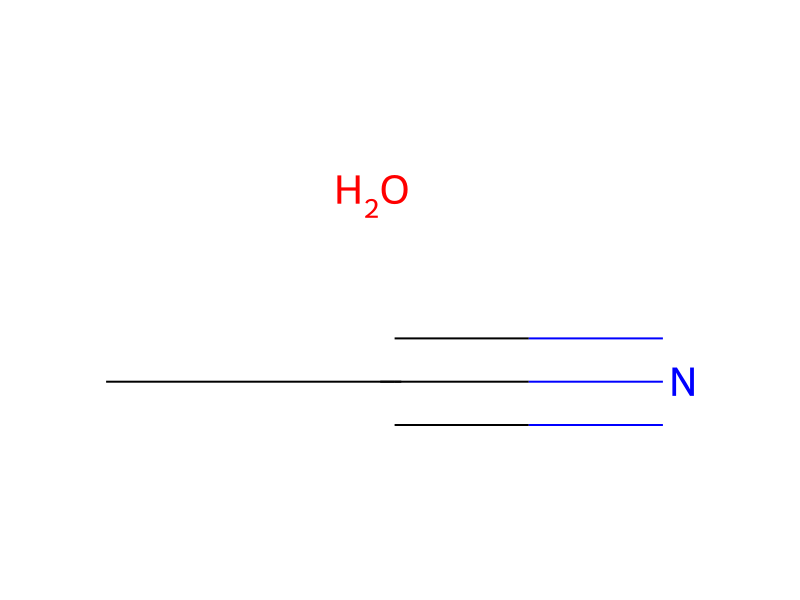
Reactant 3


Product 1

Reagents, catalysts & solvents 1

Conditions
- Temperature
- 21 °C
Procedure
{1-(cis-4-{[6-(2-Hydroxyethyl)-2-(trifluoromethyl)pyrimidin-4-yl]oxy}cyclohexyl)-3-[4-(7-{[2-(trimethylsilyl)ethoxy]methyl}-7H-pyrrolo[2,3-d]pyrimidin-4-yl)-1H-pyrazol-1-yl]azetidin-3-yl}acetonitrile (Example 45, Step 5) (24 mg, 0.035 mmol) was dissolved in methylene chloride (1 mL), and 2-methoxy-N-(2-methoxyethyl)-N-(trifluoro-λ(4)-sulfanyl)ethanamine (10 μL, 0.056 mmol) was added. The mixture was stirred at 21° C. for 2 h. LCMS showed conversion to product. The reaction was quenched with aqueous bicarbonate. The organic layer was concentrated. The product was isolated by prep LCMS using a Waters Fraction-Linx instrument and a 30 mm×100 mm Xbridge C18 column; 60 mL/min; 50% CH3CN—H2O (0.1% NH4OH), 2 min; 10 min gradient to 75%; detector set at m/z 700; retention time, 12.2 min. The solvent was removed by rotary evaporation. To deprotect to give the final product, the intermediate product was dissolved in methylene chloride (0.5 mL) and trifluoroacetic acid was added (0.5 mL, 6 mmol). The mixture was stirred for 1 h, and then the solution was concentrated to remove TFA. The residue was dissolved in acetonitrile (1.0 mL). Ammonium hydroxide (15.0 M) in water (0.41 mL, 6.2 mmol) was added, and then the solution was stirred at 21° C. for 18 h. The reaction mixture was then concentrated. The product was isolated by preparative LCMS using a Waters Fraction-Linx instrument and a 19 mm×100 mm Sunfire C18 column; 30 mL/min; 12% CH3CN—H2O (0.1% TFA), 4 min; 8 min gradient to 36%; detector set at m/z 570; retention time 11.8 min. The product was freeze-dried to give the white solid. 1H NMR was consistent with the structure and 2.5 TFA salt. 1H NMR (400 MHz, DMSO-D6): δ 12.2 (brs, 1H, NH); 10.3 (brs, 1H, NH); 9.00 (brs, 1H); 8.70 (s, 1H); 8.55 (brs, 1H); 7.65 (m, 1H); 7.10 (m, 2H); 5.30 (brm, 1H, OCH); 4.5-5.0 (m, 4H, NCH and 2H, FCH2); 3.8 (s, 2H, CH2CN); 3.4 (m, 1H, NCH); 3.19 (dt, 2H, CH2); 2.16 (m, 2H); 1.82 (m, 2H); 1.68 (m, 2H)); 1.49 (m, 2H). 19F NMR (376 MHz, DMSO-D6): δ −69.9 (ArCF3); −74.4 (TFA); −218.5 (tt, CH2-F).
Workup
- customThe reaction was quenched with aqueous bicarbonate
- concentrationThe organic layer was concentrated
- customThe product was isolated by prep LCMS
- custom10 min
- customretention time, 12.2 min
- customThe solvent was removed by rotary evaporation
Sources & evidence
- ORD record
- ord-ced9879aa83a483db121da759dc00b93
- Source dataset
- uspto-grants-2016_06
- Patent number
- US09359358B2
Reaction notes
Loading…