Methanol → HCID 16122314, compound
Reaction equation

[CH3:1][O:2][C:3]1[CH:4]=[C:5]([C:9]2[CH:14]=[CH:13][CH:12]=[CH:11][C:10]=2[C:15]2[CH:20]=[CH:19][CH:18]=[C:17]([O:21][CH3:22])[CH:16]=2)[CH:6]=[CH:7][CH:8]=1.CO>ClCCl.[Fe](Cl)(Cl)Cl>[CH3:22][O:21][C:17]1[CH:18]=[CH:19][C:20]2[C:6]3[C:5](=[CH:4][C:3]([O:2][CH3:1])=[CH:8][CH:7]=3)[C:9]3[C:10](=[CH:11][CH:12]=[CH:13][CH:14]=3)[C:15]=2[CH:16]=1Participants
Reactant 2


Product 1

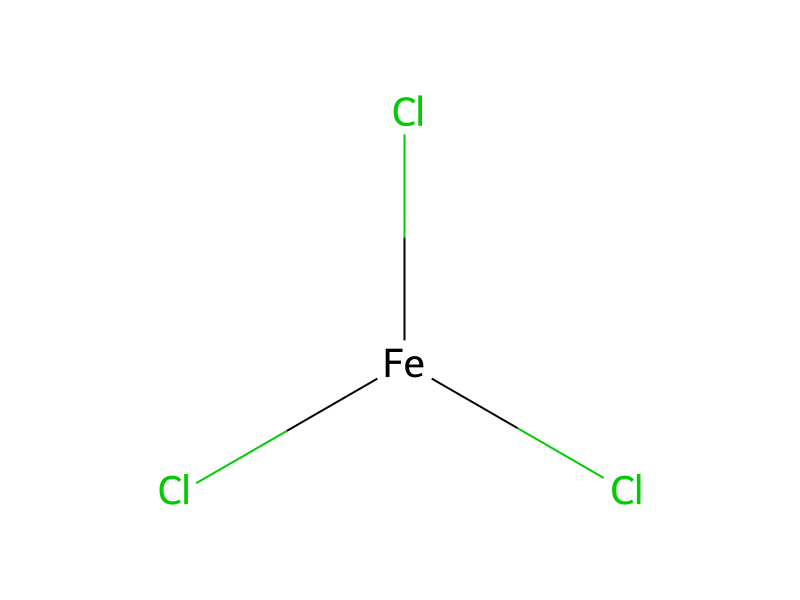
Reagents, catalysts & solvents 2

Procedure
Into a flask, 2 g of 1,2-bis(3-methoxyphenyl)benzene was put, and allowed to dissolve in 100 ml of dichloromethane under nitrogen atmosphere. In the solution, 3.25 g of iron(III) chloride was added, and the solution was stirred at room temperature for 56.5 hours. Methanol was added to terminate the reaction, and then the solution was washed by water. The organic layer was purified by silica gel column chromatography, and then recrystallized in a toluene/heptane mixed solvent, and thus 1.4 g of 2,7-dimethoxytriphenylene was obtained. Obtained 2,7-dimethoxytriphenylene was converted to 2,7-dihydroxytriphenylene by boron tribromide, and allowed to react with trifluoromethanesulfonyl chloride, and converted to 2,7-bis(trifluoromethanesulfonyloxy)triphenylene. The product was allowed react with bis(pinacolate)diboron, and thus 2,7-bis(4,4,5,5-tetramethyl-1,3,2-dioxaborolanyl)triphenylene was synthesized.
Workup
- customto terminate
- customthe reaction
- washthe solution was washed by water
- customThe organic layer was purified by silica gel column chromatography
- customrecrystallized in a toluene/heptane mixed solvent
Sources & evidence
- ORD record
- ord-5b78d75bb38548288b051798ac288750
- Source dataset
- uspto-grants-2012_06
- Patent number
- US08202633B2
Reaction notes
Loading…