Phenylacetylene → 1-chloro-4-(1-octynyl)benzene
Reaction equation

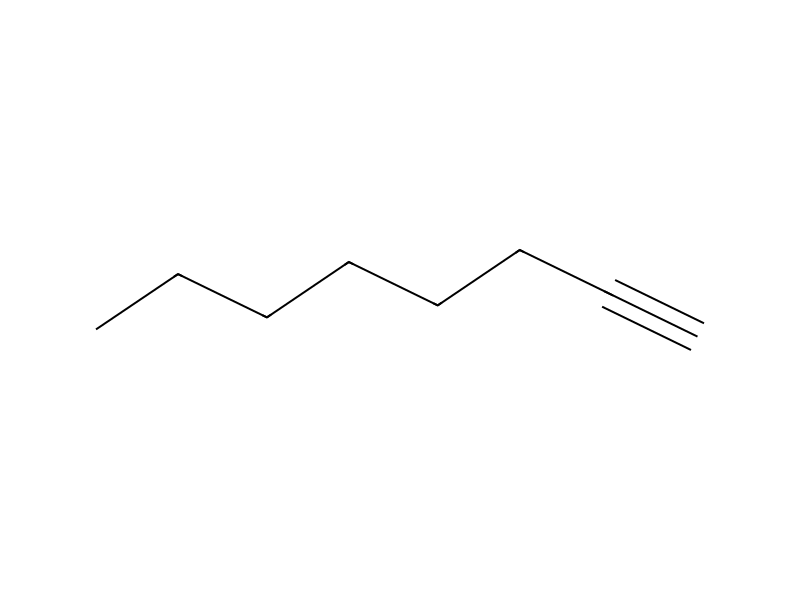
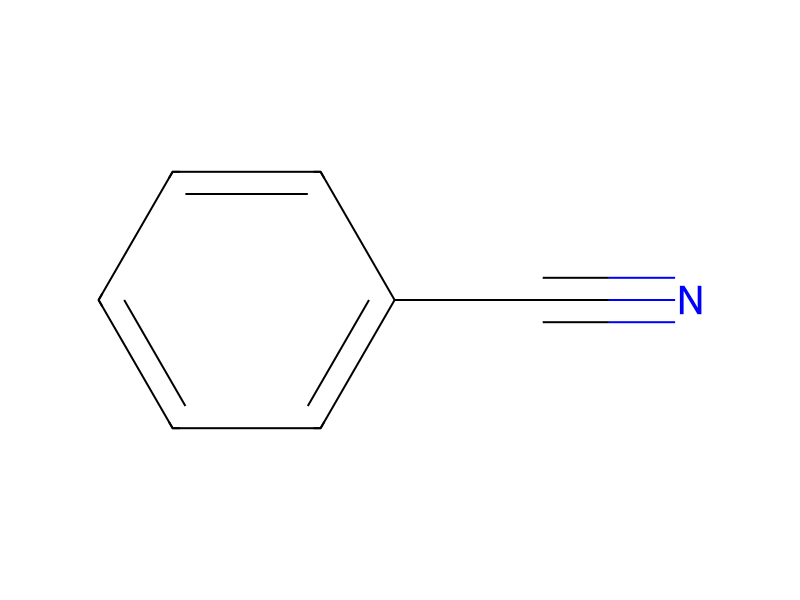
[CH:1]#[C:2][CH2:3][CH2:4][CH2:5][CH2:6][CH2:7]C.C1(C#C)C=CC=CC=1.[Cl:17][C:18]1[CH:25]=[CH:24][C:21]([C:22]#N)=[CH:20][CH:19]=1>C(C1C=CC(C#CCCCCCC)=CC=1)#CCCCCCC.C(#N)C1C=CC=CC=1>[Cl:17][C:18]1[CH:25]=[CH:24][C:21]([C:22]#[C:1][CH2:2][CH2:3][CH2:4][CH2:5][CH2:6][CH3:7])=[CH:20][CH:19]=1Participants
6
Reactant 3


Product 1

Reagents, catalysts & solvents 2

Procedure
The procedure was identical to Example 1, with the exception that 1-octyne (0.590 ml; 0.441 g; 4.00 mmol) was used as a substrate instead of phenylacetylene and 4-chlorobenzonitrile (0.275 g; 2.00 mmol) was used as a substrate instead of benzonitrile. GC analysis of the organic phase of the hydrolyzed reaction sample after 23 h at 65° C. showed the presence of 1.41 mmol (70% yield) of 1-chloro-4-(1-octynyl)benzene, 0.11 mmol 1,4-bis(1-octynyl)benzene and no remaining 4-chlorobenzonitrile in the reaction mixture.
Sources & evidence
- ORD record
- ord-312db37ac42b4b2ab5e379071f40b6f9
- Source dataset
- uspto-grants-2006_09
- Patent number
- US07105707B2
Reaction notes
Loading…