Potassium Hydroxide → HCID 54525745, compound
Reaction equation

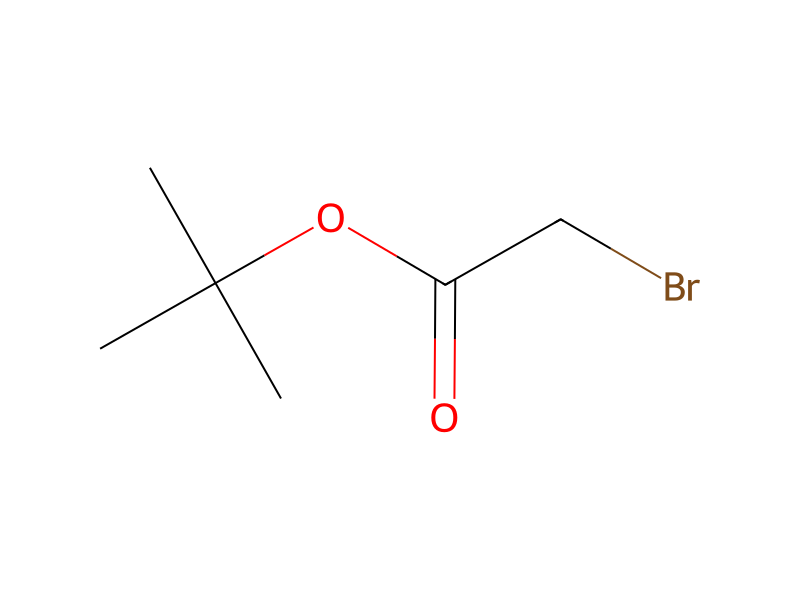
[OH-].[K+].[Br:3][C:4]1[CH:9]=[CH:8][C:7]([SH:10])=[CH:6][CH:5]=1.Br[CH2:12][C:13]([O:15][C:16]([CH3:19])([CH3:18])[CH3:17])=[O:14]>C(O)C>[Br:3][C:4]1[CH:9]=[CH:8][C:7]([S:10][CH2:12][C:13]([O:15][C:16]([CH3:19])([CH3:18])[CH3:17])=[O:14])=[CH:6][CH:5]=1Participants
5
Reactant 3


Product 1

Reagents, catalysts & solvents 1

Procedure
1.36 g of potassium hydroxide was dissolved in 38 ml ethanol by heating, allowed to cool, mixed with 3.8 g of 4-bromobenzenethiol, further with 3.8 g of silica gel and 2.96 ml of t-butyl bromoacetate, followed by stirring at room temperature for 4 hours. Silica gel was filtered off and the filtrate was concentrated and purified via column chromatography on silica gel (ethyl acetate:hexane=1:20) to give t-butyl [(4-bromophenyl)thio]acetate (5.98 g, 98.6%).
Workup
- temperatureby heating
- temperatureto cool
- filtrationSilica gel was filtered off
- concentrationthe filtrate was concentrated
- custompurified via column chromatography on silica gel (ethyl acetate:hexane=1:20)
Sources & evidence
- ORD record
- ord-0a5852529313490c8be2c5b2cc4ce393
- Source dataset
- uspto-grants-2002_07
- Patent number
- US06413995B1
Reaction notes
Loading…