Dichloromethane → HCID 24780046, compound
Reaction equation

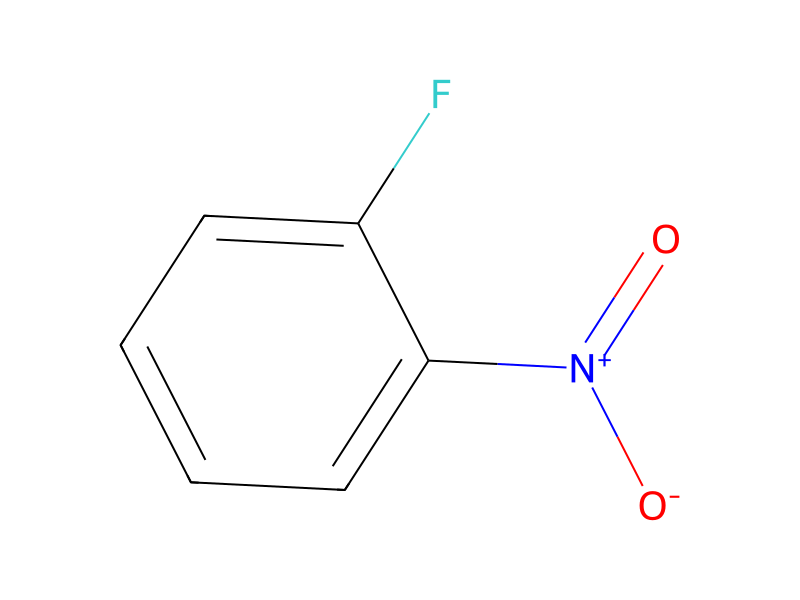
F[C:2]1[CH:7]=[CH:6][CH:5]=[CH:4][C:3]=1[N+:8]([O-:10])=[O:9].[F:11][C:12]([F:22])([F:21])[O:13][C:14]1[CH:20]=[CH:19][C:17]([NH2:18])=[CH:16][CH:15]=1.C([O-])(C)(C)C.[K+].ClCCl>CS(C)=O>[N+:8]([C:3]1[CH:4]=[CH:5][CH:6]=[CH:7][C:2]=1[NH:18][C:17]1[CH:19]=[CH:20][C:14]([O:13][C:12]([F:11])([F:21])[F:22])=[CH:15][CH:16]=1)([O-:10])=[O:9]Participants
6
Reactant 4



Product 1

Reagents, catalysts & solvents 1

Conditions
- Temperature
- 110 °C
Procedure
To 374 μL of 2-fluoro-nitrobenzene in 2 mL of DMSO are added 962 μL of 4-trifluoromethoxyaniline (2 equivalents) and 636 mg of potassium tert-butanolate (1.6 equivalents). The whole is heated to 110° C. for 3 hrs. Once the reaction is completed, the medium taken up in a minimum of dichloromethane is hydrolyzed and then extracted. The organic phase is successively washed with water and then with a saturated solution of sodium chloride, dried on magnesium sulfate, filtered and concentrated under reduced pressure. A silica gel chromatography of the residue (cyclohexane and then cyclohexane/ethyl acetate: 99/1) allows 575 mg of the desired product to be isolated.
Workup
- extractionextracted
- washThe organic phase is successively washed with water
- dry with materialwith a saturated solution of sodium chloride, dried on magnesium sulfate
- filtrationfiltered
- concentrationconcentrated under reduced pressure
- customto be isolated
Sources & evidence
- ORD record
- ord-e2f44779bbf44042aa4df3a63cb7539e
- Source dataset
- uspto-grants-2012_06
- Patent number
- US08207373B2
Reaction notes
Loading…