Sodium Hydroxide → N'-(2,6-dichloro-4-trifluoromethylphenyl)-4-cyanobenzohydrazide
Reaction equation

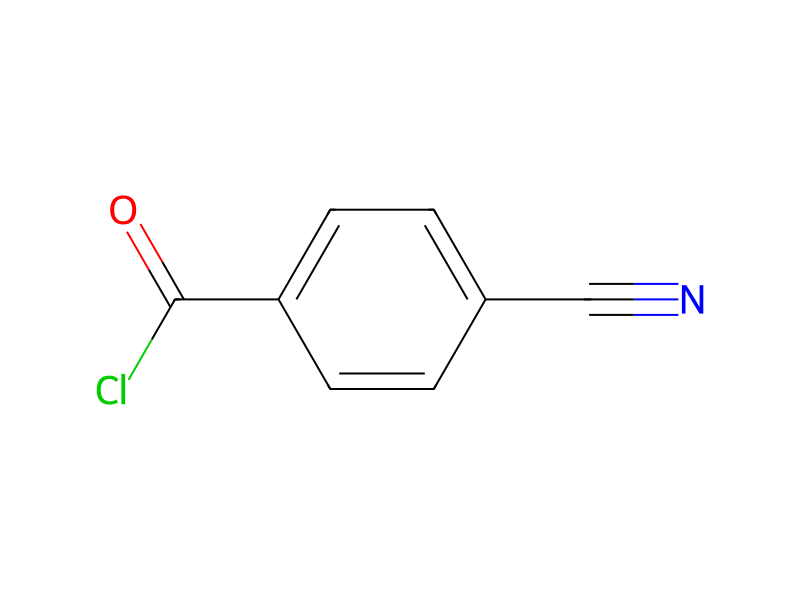
[C:1]([C:3]1[CH:11]=[CH:10][C:6]([C:7](Cl)=[O:8])=[CH:5][CH:4]=1)#[N:2].[Cl:12][C:13]1[CH:18]=[C:17]([C:19]([F:22])([F:21])[F:20])[CH:16]=[C:15]([Cl:23])[C:14]=1[NH:24][NH2:25].[OH-].[Na+]>C(Cl)Cl>[Cl:12][C:13]1[CH:18]=[C:17]([C:19]([F:21])([F:20])[F:22])[CH:16]=[C:15]([Cl:23])[C:14]=1[NH:24][NH:25][C:7](=[O:8])[C:6]1[CH:10]=[CH:11][C:3]([C:1]#[N:2])=[CH:4][CH:5]=1Participants
5




Procedure
A solution of 14.2 g of 4-cyanobenzoyl chloride in 100 ml of methylene chloride is added dropwise with stirring at from 10 to 15° in the course of approximately 30 minutes to 20 g of 2,6-dichloro-4-trifluoromethylphenylhydrazine in 250 ml of dichloromethane, and the mixture is stirred for a further 16 hours. 36 ml of aqueous sodium hydroxide solution (10%) is then run in with vigorous stirring. 100 ml of methylene chloride are added, the organic phase is washed three times using in each case 100 ml of water and dried over sodium sulfate, and the solvent is removed on a rotary evaporator. After the residue has been recrystallized from toluene, the title product of melting point 185-186° is obtained (compound no. 1.6).
Workup
- washthe organic phase is washed three times
- dry with materialdried over sodium sulfate
- customthe solvent is removed on a rotary evaporator
- customAfter the residue has been recrystallized from toluene
Sources & evidence
- ORD record
- ord-3f9451a7f5c54cd4bee773f959deb221
- Source dataset
- uspto-grants-2002_07
- Patent number
- US06417386B2
Reaction notes
Loading…