Triethylene Glycol → 1,2,4-Trimethylbenzene
Reaction equation

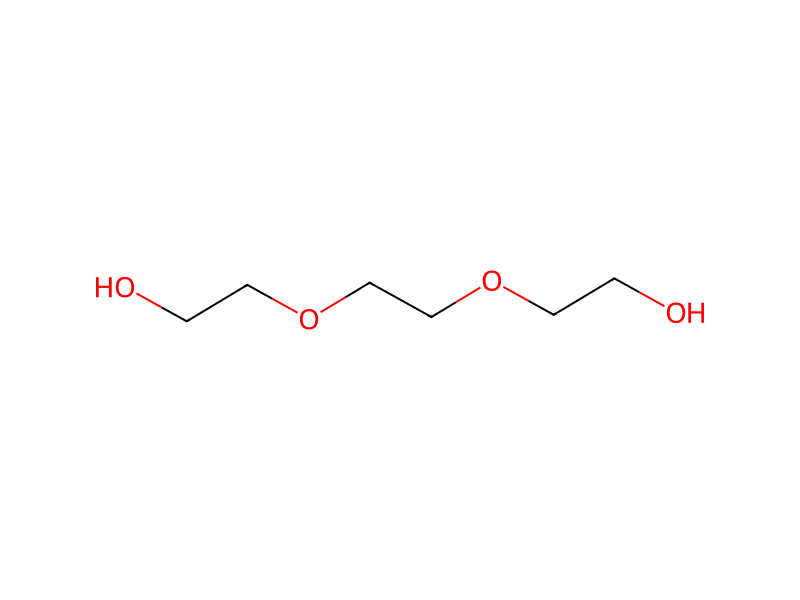
[CH:1]1[C:6]([C:7](O)=O)=[CH:5][C:4]2[C:10](O[C:13](=O)[C:3]=2[CH:2]=1)=O.C(O)COCCOCCO.C(O)(=O)C1C(=CC(=CC=1)C(O)=O)C(O)=O>>[C:3]1([C:4](=[CH:5][C:6](=[CH:1][CH:2]=1)[CH3:7])[CH3:10])[CH3:13]Participants


Procedure
An improved process for the manufacture of trimellitic acid anhydride having a 97 to 98% anhydride content and having a triethylene glycol color of 170 or less, in yields in the range of 89 to 90% and higher based on the total trimellitic acid produced by catalytic air oxidation of pseudocumene, including the steps of catalytic oxidation of pseudocumene in the presence of acetic acid in an oxidation zone wherein liquid-phase conditions are maintained and wherein the weight ratio of acetic acid to pseudocumene is in the range of about 0.5-5.0:1.0 and the catalyst comprises one or more heavy metal oxidation catalysts comprising zirconium, cobalt, and manganese to provide about 0.1 to about 0.4 weight percent total metals based on pseudocumene and a source of bromine and to provide a total of about 0.1 to about 0.3 weight percent total bromine based on pseudocumene, wherein the total weight ratio of bromine ions to total metal ions is about 0.5 to about 2.0, the zirconium content is about 1 to about 5%, and the manganese content is about 14 to about 60%, each metal by weight of the total metals and wherein the cobalt content is about 35 to about 80 weight percent, temperatures in the oxidation are in a range of about 220° F. to about 480° F., cooling the oxidation reaction effluent to crystallize trimellitic acid, separating and recovering crystallized trimellitic acid from the acetic acid solvent mother liquor, distilling from the acetic acid mother liquor to obtain a mixture of acetic acid and water for concentration of the acetic acid content to provide acetic acid solvent concentrate for recycle to the oxidation and to obtain a bottoms fraction containing high melting solids, heating the crystalline trimellitic acid to convert it to its anhydride and distilling the anhydride to obtain trimellitic acid anhydride product; the improvements comprising conducting the conversion continuously in two series staged dehydration zones with heat removal by evaporation from the liquid in each of the dehydration zones operated at temperatures in a range of about 400° to about 500° F. thereby converting trimellitic acid to its anhydride and evaporating acetic acid solvent, distilling the liquid crude trimellitic anhydride, condensing the vaporized overhead fraction to obtain trimellitic anhydride product, combining the vapor from the first dehydration zone and the acetic acid mother liquor as feed for distilling acetic acid and water mixture therefrom leaving the residue containing high melting solids, combining the residue and the bottom fraction from the distillation of the trimellitic anhydride containing catalyst metals, and continuously adding up to about 50 weight percent of the combined residue and bottom fraction containing high melting solids and catalyst metals to the first dehydration zone.
Workup
- customless, in yields in the range of 89 to 90%
Sources & evidence
- ORD record
- ord-ac86bfb3f1ec41578fb1fd4c1fc19cb0
- Source dataset
- uspto-grants-1988_11
- Patent number
- US04788296
Reaction notes
Loading…