Pyridine → 7-(Bromomethyl)-N-mesityl-1,3-benzothiazol-2-amine
Reaction equation

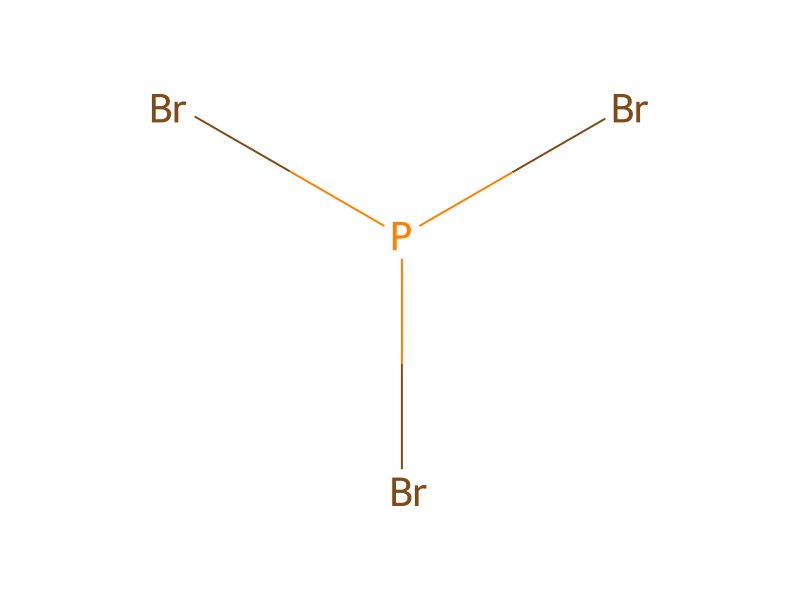
O[CH2:2][C:3]1[C:11]2[S:10][C:9]([NH:12][C:13]3[C:18]([CH3:19])=[CH:17][C:16]([CH3:20])=[CH:15][C:14]=3[CH3:21])=[N:8][C:7]=2[CH:6]=[CH:5][CH:4]=1.N1C=CC=CC=1.P(Br)(Br)[Br:29]>ClCCl>[Br:29][CH2:2][C:3]1[C:11]2[S:10][C:9]([NH:12][C:13]3[C:18]([CH3:19])=[CH:17][C:16]([CH3:20])=[CH:15][C:14]=3[CH3:21])=[N:8][C:7]=2[CH:6]=[CH:5][CH:4]=1Participants
5




Procedure
To 0.065 g (0.22 mmol) of 7-(hydroxymethyl)-N-mesityl-1,3-benzothiazol-2-amine in 2 mL of dichloromethane was added 58 μL (0.72 mmol) of pyridine and 0.24 mL (0.24 mmol) of phosphorous tribromide (1 M in dichloromethane). The reaction was stirred at room temperature for 8 h and quenched with saturated sodium bicarbonate. The organic layer was washed with brine, dried over sodium sulfate, filtered and concentrated to give 0.045 g (57%) of the title compound that was used without further purification.
Workup
- customquenched with saturated sodium bicarbonate
- washThe organic layer was washed with brine
- dry with materialdried over sodium sulfate
- filtrationfiltered
- concentrationconcentrated
Sources & evidence
- ORD record
- ord-701e9c8cd1ae49199b3bdad018753b62
- Source dataset
- uspto-grants-2010_05
- Patent number
- US07714009B2
Reaction notes
Loading…