Trimethyl orthoformate → 6-Cyclopentyl-4-methoxymethylene-4H-isoquinoline-1,3-dione
Reaction equation

[CH:1]1([C:6]2[CH:7]=[C:8]3[C:13](=[CH:14][CH:15]=2)[C:12](=[O:16])[NH:11][C:10](=[O:17])[CH2:9]3)[CH2:5][CH2:4][CH2:3][CH2:2]1.[CH3:18][O:19][CH:20](OC)OC>C(O)(=O)C>[CH:1]1([C:6]2[CH:7]=[C:8]3[C:13](=[CH:14][CH:15]=2)[C:12](=[O:16])[NH:11][C:10](=[O:17])[C:9]3=[CH:18][O:19][CH3:20])[CH2:2][CH2:3][CH2:4][CH2:5]1Participants
4
Reactant 2
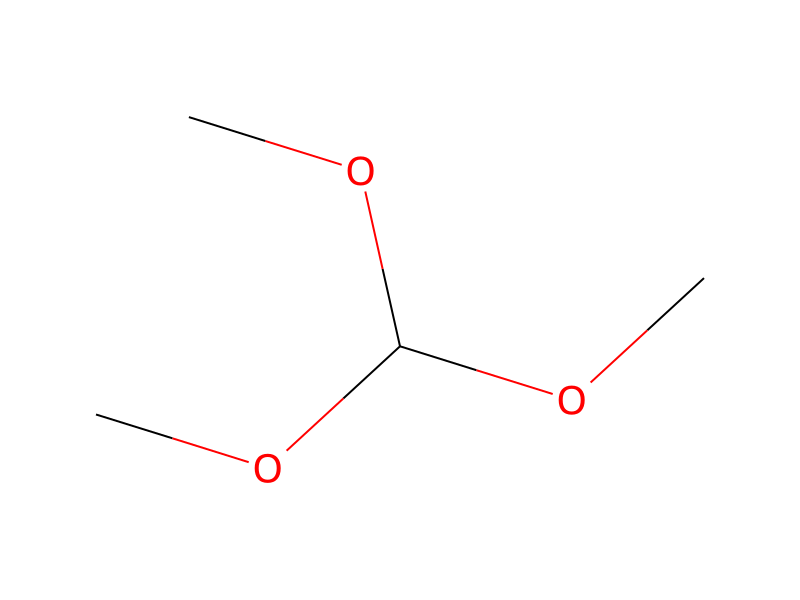

Product 1

Reagents, catalysts & solvents 1

Conditions
- Temperature
- 90 °C
Procedure
A mixture of 6-cyclopentyl-4H-isoquinoline-1,3-dione (222 mg, 0.97 mmole), 10 mL of acetic acid and trimethylorthoformate (212 mg, 2.0 mmole) is stirred and heated to 90° C. After 2 hours at that temperature the reaction mixture is cooled and the solvents were removed in-vacuo and the residue taken up in 4% methanol in dichloromethane, passed through a short pad of Florisil and eluted with 4% methanol in dichloromethane. The eluate is evaporated and the product is treated with 4:1 hexanes-ethyl acetate and collected by filtration to give a yellow solid, 165 mg, (62%), MS (ES+): m/z 272.2 (M+H).
Workup
- temperatureAfter 2 hours at that temperature the reaction mixture is cooled
- customthe solvents were removed in-vacuo
- washeluted with 4% methanol in dichloromethane
- customThe eluate is evaporated
- additionthe product is treated with 4:1 hexanes-ethyl acetate
- filtrationcollected by filtration
- customto give a yellow solid, 165 mg, (62%), MS (ES+)
Sources & evidence
- ORD record
- ord-62689173b65b4ef39049e00d1119042c
- Source dataset
- uspto-grants-2010_05
- Patent number
- US07713994B2
Reaction notes
Loading…