Water → N-isobutylidene-3-phenoxybenzylamine
Reaction equation

[CH:1](=O)[CH:2]([CH3:4])[CH3:3].[O:6]([C:13]1[CH:14]=[C:15]([CH:18]=[CH:19][CH:20]=1)[CH2:16][NH2:17])[C:7]1[CH:12]=[CH:11][CH:10]=[CH:9][CH:8]=1.O>C1(C)C=CC=CC=1>[CH:1](=[N:17][CH2:16][C:15]1[CH:18]=[CH:19][CH:20]=[C:13]([O:6][C:7]2[CH:8]=[CH:9][CH:10]=[CH:11][CH:12]=2)[CH:14]=1)[CH:2]([CH3:4])[CH3:3]Participants
5
Reactant 3

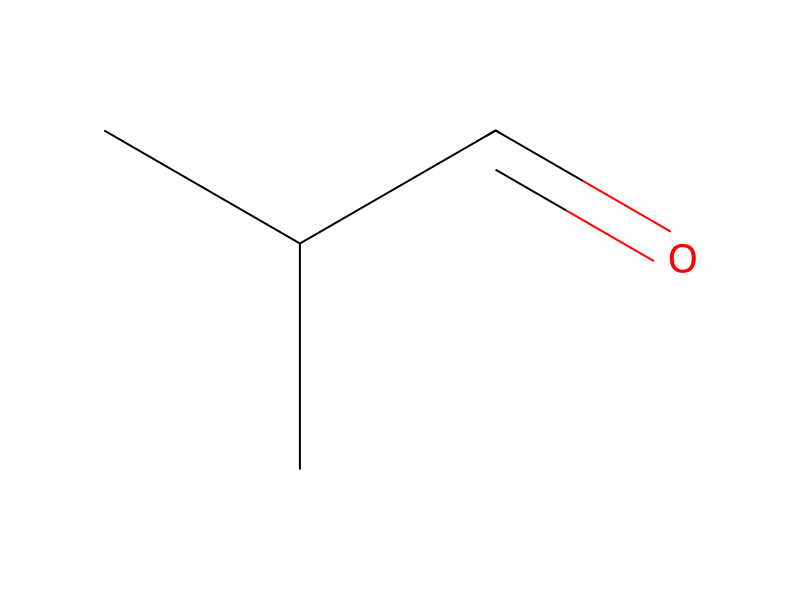

Product 1

Reagents, catalysts & solvents 1

Procedure
38 g (0.528 mol) of isobutyraldehyde is added dropwise within 30 minutes, with stirring, to a solution of 99.5 g (0.5 mol) of 3-phenoxybenzylamine in 100 ml of toluene. After completion of the dropwise addition, stirring is continued for 20 minutes at room temperature, and the water which has formed (about 8.5 g) is separated in a separating funnel. The toluene with the unreacted isobutyraldehyde and residual water is then removed by rotation in a water-jet vacuum, and the residue is distilled in an oil-pump vacuum to yield 124 g (0.49 mol) of N-isobutylidene-(3-phenoxybenzylamine) as a colourless, mobile liquid, corresponding to a yield of 97.8% of theory; b.p. 85° C./4 Pa; nD20 =1.5666.
Workup
- additionAfter completion of the dropwise addition
- customis separated in a separating funnel
- customThe toluene with the unreacted isobutyraldehyde and residual water is then removed by rotation in a water-jet vacuum
- distillationthe residue is distilled in an oil-pump vacuum
Sources & evidence
- ORD record
- ord-f58c8ad04f564144b885d3481a4c64b3
- Source dataset
- uspto-grants-1980_11
- Patent number
- US04231962
Reaction notes
Loading…