Water → N-butylprop-2-enamide;prop-2-enamide
Reaction equation

[C:1]([NH2:5])(=[O:4])[CH:2]=[CH2:3].C([C:10](=[CH2:14])[C:11]([NH2:13])=[O:12])CCC.[CH:15]([C:17]1C=CC=C[C:18]=1C=C)=[CH2:16].O>C(O)C>[C:1]([NH2:5])(=[O:4])[CH:2]=[CH2:3].[CH2:16]([NH:13][C:11](=[O:12])[CH:10]=[CH2:14])[CH2:15][CH2:17][CH3:18]Participants
6
Reactant 4


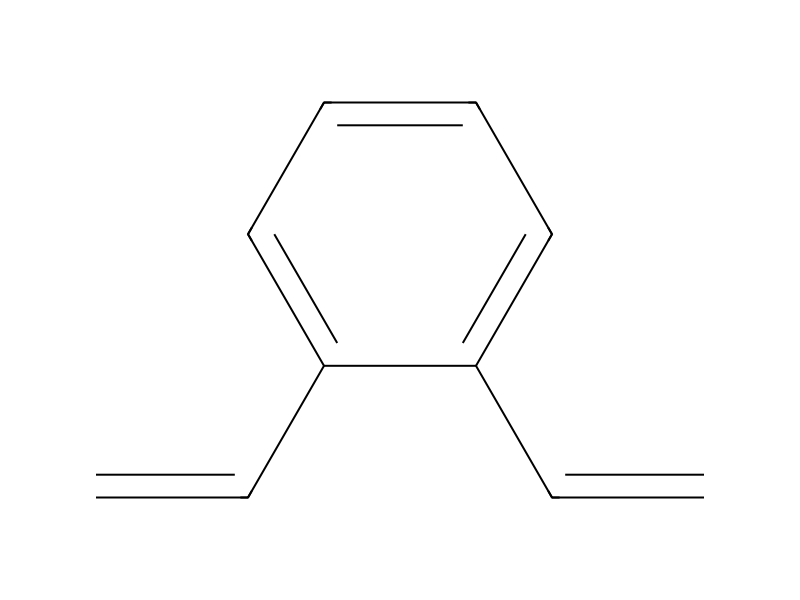

Product 1

Reagents, catalysts & solvents 1

Procedure
Polystyrenesulfonate (15.0 mmoles, 2.612 g), acrylamide (7.2 mmoles, 0.512 g), n-butylacrylamide (7.2 mmoles, 0.916 g) and divinylbenzene (0.6 mmoles, 85.5 microL) were dissolved in 5 mL ethanol and 15 mL water in a 40 mL vial fitted with a septum cap. The solution was degassed by bubbling nitrogen through and 1 mole % AIBN was added as a solution. The polymerization solution was further degassed and the placed in a heated reaction block at 60° C. for 18 h. A clear, colorless gel formed.
Workup
- customcap
- customThe solution was degassed
- customby bubbling nitrogen through and 1 mole % AIBN
- additionwas added as a solution
- customThe polymerization solution was further degassed
- customthe placed in a heated reaction block at 60° C. for 18 h
- customA clear, colorless gel formed
Sources & evidence
- ORD record
- ord-6e575e91bc384bc59f5fd0887ef30ccb
- Source dataset
- uspto-grants-2010_03
- Patent number
- US07678369B2
Reaction notes
Loading…