Citric Acid → Trisodium citrate
Reaction equation

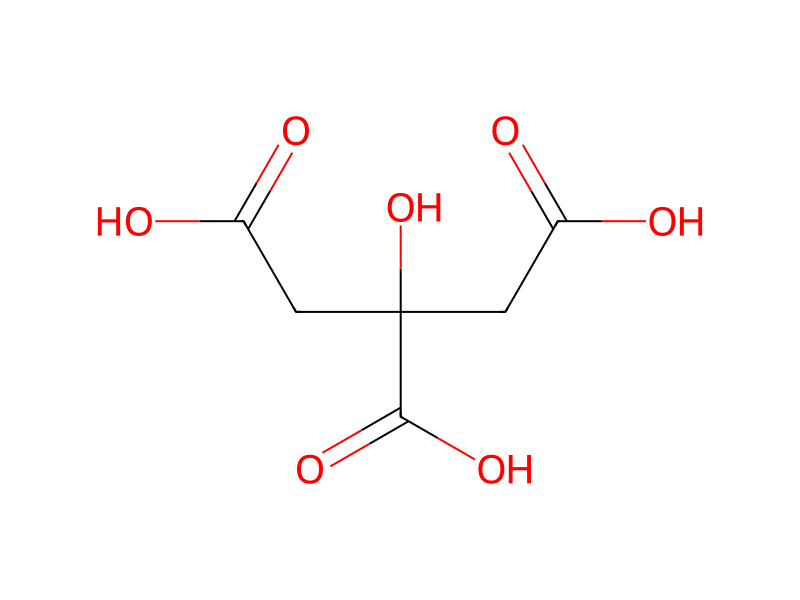
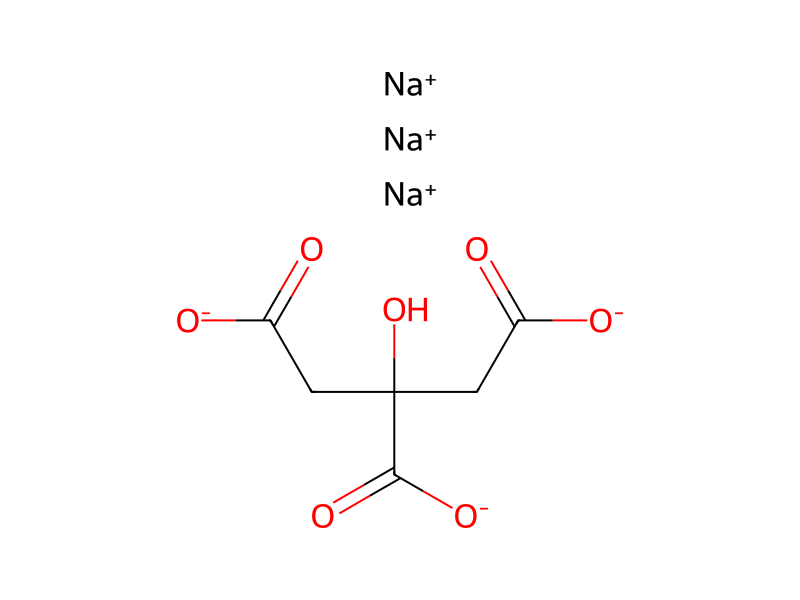
[C:1]([OH:13])(=[O:12])[CH2:2][C:3]([CH2:8][C:9]([OH:11])=[O:10])([C:5]([OH:7])=[O:6])[OH:4].[OH-].[Na+:15]>O>[C:1]([O-:13])(=[O:12])[CH2:2][C:3]([CH2:8][C:9]([O-:11])=[O:10])([C:5]([O-:7])=[O:6])[OH:4].[Na+:15].[Na+:15].[Na+:15]Participants
4
Reactant 2

Product 1
Reagents, catalysts & solvents 1

Conditions
- Temperature
- 80 °C
Procedure
A 1 liter beaker was charged with 141 g of H2O and 189 g of citric acid to simulate citric acid mother liquor. While stirring, 229.5 g of a 50% sodium hydroxide solution was added to bring the pH to 6.7. The solution was heated to 80° C. and filtered as before. The hot solution was placed in a 2 liter, 3 neck round bottom flask fitted with a reflux condenser, stirrer and heating mantle. A total of 1333 ml (1052 g) of ethyl alcohol was added over a 30 minute period while maintaining reflux to form a slurry of sodium citrate crystals.
Workup
- filtrationfiltered as before
- customfitted with a reflux condenser, stirrer
- temperatureheating mantle
- additionA total of 1333 ml (1052 g) of ethyl alcohol was added over a 30 minute period
- temperaturewhile maintaining
- temperaturereflux
Sources & evidence
- ORD record
- ord-c3c6293967a7439ebb5aa57e5bfa4724
- Source dataset
- uspto-grants-1991_08
- Patent number
- US05041645
Reaction notes
Loading…