Epichlorohydrin → HCID 23330757, compound
Reaction equation
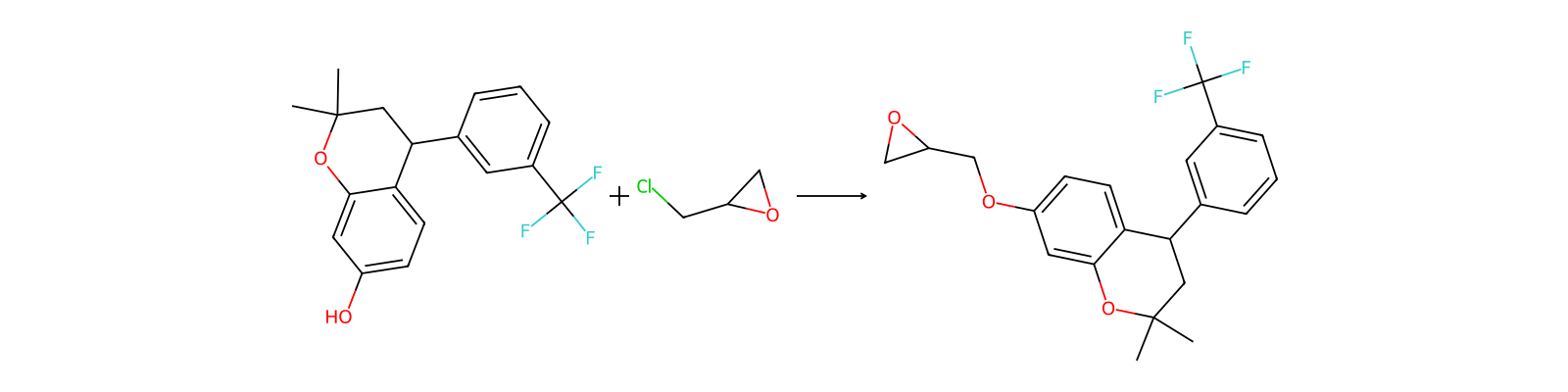
[F:1][C:2]([F:23])([F:22])[C:3]1[CH:4]=[C:5]([CH:9]2[C:18]3[C:13](=[CH:14][C:15]([OH:19])=[CH:16][CH:17]=3)[O:12][C:11]([CH3:21])([CH3:20])[CH2:10]2)[CH:6]=[CH:7][CH:8]=1.[CH2:24]([CH:26]1[O:28][CH2:27]1)Cl>>[O:28]1[CH2:27][CH:26]1[CH2:24][O:19][C:15]1[CH:14]=[C:13]2[C:18]([CH:9]([C:5]3[CH:6]=[CH:7][CH:8]=[C:3]([C:2]([F:1])([F:22])[F:23])[CH:4]=3)[CH2:10][C:11]([CH3:21])([CH3:20])[O:12]2)=[CH:17][CH:16]=1Participants
3


Procedure
Reaction of 4-(3-Trifluoromethylphenyl)-2,2-dimethyl-7-chromanol with epichlorohydrin, by an analogous method to that described in Example 1, gave 7-(2,3-epoxypropoxy)-4-(3-trifluoromethylphenyl)-2,2-dimethylchroman. Reaction of this epoxide with methylamine, by an analogous method to that described in Example 2 gave 4-(3-trifluoromethyl-phenyl-7-(2-hydroxy-3-methylaminopropoxy)-2,2-dimethylchroman, (benzoate salt, m.p. 145°-157°).
Sources & evidence
- ORD record
- ord-039ff9dd936946aa9565f4e4f767cdfb
- Source dataset
- uspto-grants-1980_11
- Patent number
- US04234726
Reaction notes
Loading…