Oxygen → HCID 19019891, compound
Reaction equation

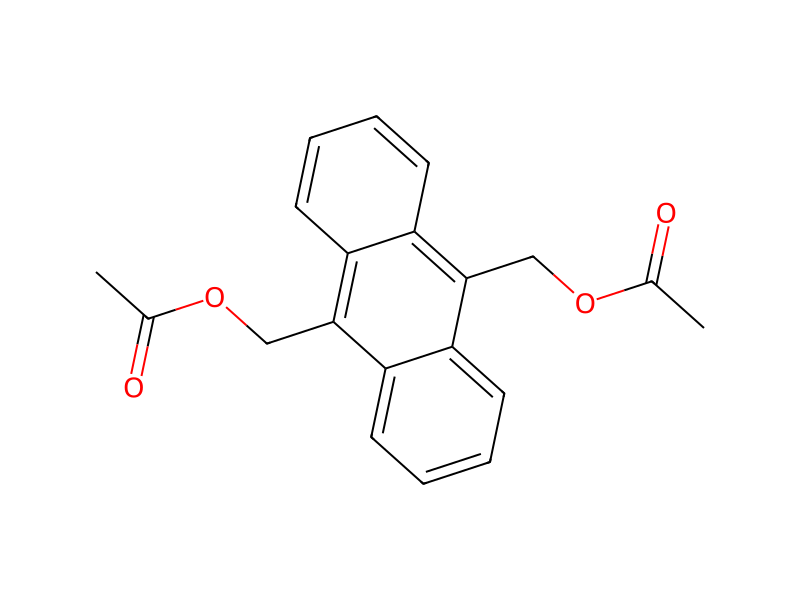
[H-].[Al+3].[Li+].[H-].[H-].[H-].CC(OCC1C2C(=CC=CC=2)C(COC(C)=O)=C2C=1C=CC=C2)=[O:9].[C:31]([NH:34][CH:35]([C:48]1[CH:52]=[CH:51][O:50][C:49]=1[Si](CC)(CC)CC)[CH2:36][CH2:37][CH2:38][CH2:39][CH2:40][CH2:41][CH2:42][CH2:43][CH2:44][CH2:45][CH2:46][CH3:47])(=[O:33])[CH3:32].O=O.[BH4-].[Na+]>>[C:31]([NH:34][CH:35]([C:48]1[C:49](=[O:9])[O:50][CH2:51][CH:52]=1)[CH2:36][CH2:37][CH2:38][CH2:39][CH2:40][CH2:41][CH2:42][CH2:43][CH2:44][CH2:45][CH2:46][CH3:47])(=[O:33])[CH3:32]Participants
6





Procedure
Reacting 3-(1-hydroxytridecyl)-2-triethylsilylfuran (Compound 20) with diphenylphosphoryl azide and diethyl azidocarboxylate gives 3-(1-azidotridecyl)-2-triethylsilylfuran (Compound 24). Reducing this intermediate with lithium aluminum hydride, followed by acetylation with acetic anhydide gives 3-(1-acetamido tridecyl)-2-triethylsilylfuran (Compound 25). Singlet oxygen oxidation of this amide, under conditions as in Example 1, followed by reduction with sodium borohydride gives 3-(1-acetamidotridecyl)-2(5H)-furanone (Compound 10).
Sources & evidence
- ORD record
- ord-6f5c70657962401ab07d407ea94b095c
- Source dataset
- uspto-grants-1991_08
- Patent number
- US05043457
Reaction notes
Loading…