3-Pyridineacetic acid → HCID 19746660, compound
Reaction equation

[Br:1]Br.[N:3]1[CH:8]=[CH:7][CH:6]=[C:5]([CH2:9][C:10]([OH:12])=[O:11])[CH:4]=1.ClCCl.P(Cl)(Cl)(Cl)(Cl)Cl.[C:22](O)([CH3:25])([CH3:24])[CH3:23]>P(Br)(Br)Br.N1C=CC=CC=1>[Br:1][CH:9]([C:5]1[CH:4]=[N:3][CH:8]=[CH:7][CH:6]=1)[C:10]([O:12][C:22]([CH3:25])([CH3:24])[CH3:23])=[O:11]Participants






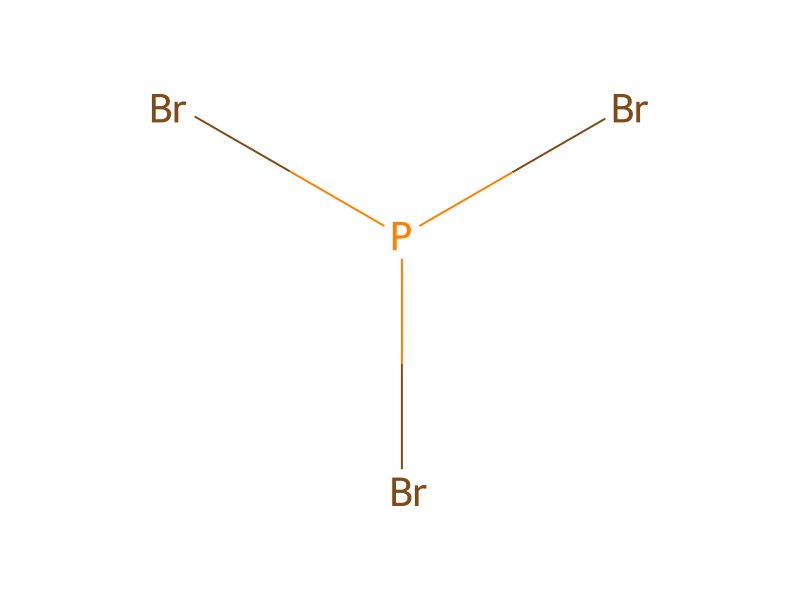

Procedure
After 3.7 ml (71.8 mmols) of bromine and 0.1 ml (0.1 mmol) of phosphorus tribromide were added to 10 g (57.6 mmoles) of 3-pyridylacetic acid, the resulting mixture was stirred at 80° to 90° C. for an hour. At room temperature 150 ml of dichloromethane was added to the mixture and 13.0 g (62.4 mmols) of phosphorus pentachloride was further added thereto. The mixture was stirred for an hour. The solution was dropwise added at -60° to -70° C. to a mixture of 150 ml of dichloromethane, 27 ml of tert-butanol and 23 ml of pyridine. After the temperature was elevated to room temperature, the solution was washed, in sequence, with 1N hydrochloric acid aqueous solution and saturated sodium hydrogencarbonate aqueous solution. The solution was dried over anhydrous magnesium sulfate and the solvent was distilled off. The resulting oil was subjected to silica gel column chromatography and the column was eluted with dichloromethane-methanol (10:1) to give 6.8 g (43.6%) of t-butyl 2-bromo-2-(3-pyridyl)acetate.
Workup
- additionwas further added
- stirringThe mixture was stirred for an hour
- customwas elevated to room temperature
- washthe solution was washed, in sequence, with 1N hydrochloric acid aqueous solution and saturated sodium hydrogencarbonate aqueous solution
- dry with materialThe solution was dried over anhydrous magnesium sulfate
- distillationthe solvent was distilled off
- washthe column was eluted with dichloromethane-methanol (10:1)
Sources & evidence
- ORD record
- ord-3dfc2c6d36b4446799e9612865868201
- Source dataset
- uspto-grants-1993_08
- Patent number
- US05233035
Reaction notes
Loading…