Ethyl 3-aminobenzoate → 1-(3-Ethoxycarbonylphenyl)pyrrole
Reaction equation

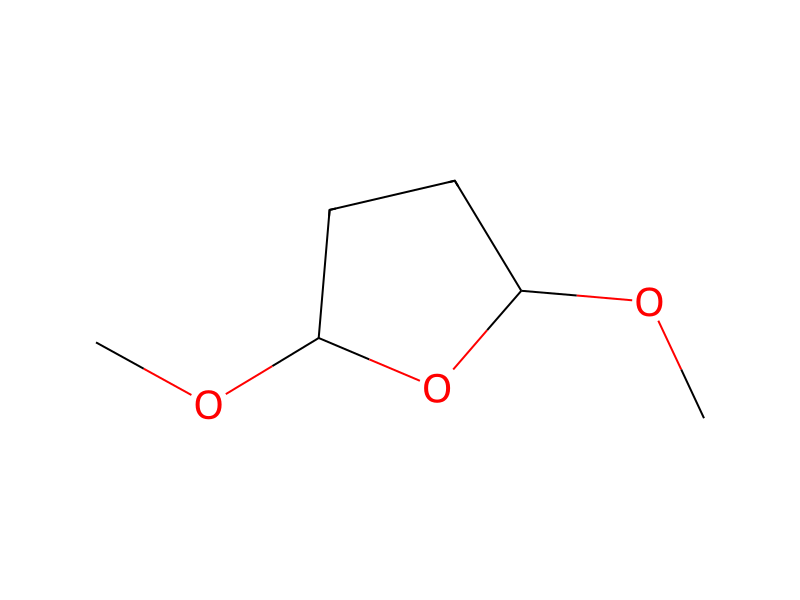
[NH2:1][C:2]1[CH:3]=[C:4]([CH:10]=[CH:11][CH:12]=1)[C:5]([O:7][CH2:8][CH3:9])=[O:6].CO[CH:15]1[CH2:19][CH2:18][CH:17](OC)O1>C(O)(=O)C>[N:1]1([C:2]2[CH:3]=[C:4]([CH:10]=[CH:11][CH:12]=2)[C:5]([O:7][CH2:8][CH3:9])=[O:6])[CH:15]=[CH:19][CH:18]=[CH:17]1Participants
Reactant 2

Product 1

Reagents, catalysts & solvents 1

Procedure
Ethyl m-aminobenzoate (1.6 g) was dissolved in 10 ml of glacial acetic acid, and 1.3 g of 2,5-dimethoxytetrahydrofuran was added. The mixture was refluxed for 2 hours, and the solvent was evaporated. The residue was dissolved in a mixture of ethyl acetate and water. The organic layer was separated, and then worked up in a customary manner. Finally, recrystallization from hexane gave 1.7 g (yield 82%) of ethyl 3-(1-pyrrolyl)benzoate as colorless needles having a melting point of 64° to 65° C. The resulting pyrrolyl compound (1.1 g) was dissolved in 30 ml of ethyl ether, and with stirring under ice cooling, 0.2 g of lithium aluminum hydride was added. The mixture was stirred for 1 hour. The reaction mixture was extracted by adding water and ethyl ether. The extract was worked up in a customary manner. Recrystallization from a mixture of ethyl acetate and hexane gave 0.80 g (yield 91%) of 3-(1-pyrrolyl)benzyl alcohol as colorless needles having a melting point of 66° to 68° C.
Workup
- temperatureThe mixture was refluxed for 2 hours
- customthe solvent was evaporated
- dissolutionThe residue was dissolved in a mixture of ethyl acetate and water
- customThe organic layer was separated
- customFinally, recrystallization from hexane
Sources & evidence
- ORD record
- ord-5c4f32f9e4874c9ab4fcfda8abc07d62
- Source dataset
- uspto-grants-1993_08
- Patent number
- US05234946
Reaction notes
Loading…