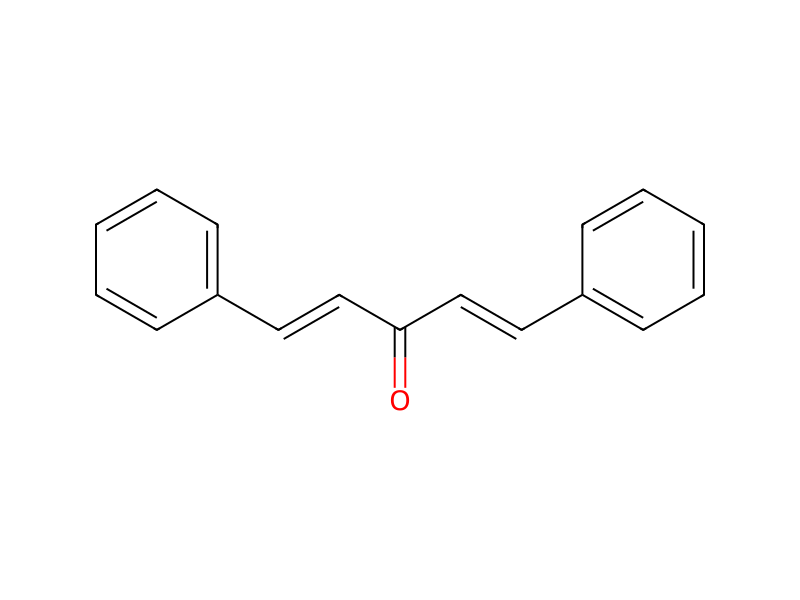
Palladium → Bis(dibenzylideneacetone)palladium
Reaction equation

C([O-])(=O)C.[Na+].[CH:6](=[CH:13][C:14]([CH:16]=[CH:17][C:18]1[CH:23]=[CH:22][CH:21]=[CH:20][CH:19]=1)=[O:15])[C:7]1[CH:12]=[CH:11][CH:10]=[CH:9][CH:8]=1.[Pd:24]>>[CH:21]1[CH:20]=[CH:19][C:18](/[CH:17]=[CH:16]/[C:14](/[CH:13]=[CH:6]/[C:7]2[CH:12]=[CH:11][CH:10]=[CH:9][CH:8]=2)=[O:15])=[CH:23][CH:22]=1.[CH:21]1[CH:20]=[CH:19][C:18](/[CH:17]=[CH:16]/[C:14](/[CH:13]=[CH:6]/[C:7]2[CH:12]=[CH:11][CH:10]=[CH:9][CH:8]=2)=[O:15])=[CH:23][CH:22]=1.[CH:21]1[CH:20]=[CH:19][C:18](/[CH:17]=[CH:16]/[C:14](/[CH:13]=[CH:6]/[C:7]2[CH:12]=[CH:11][CH:10]=[CH:9][CH:8]=2)=[O:15])=[CH:23][CH:22]=1.[Pd:24].[Pd:24]Participants
4



Conditions
- Temperature
- 55 °C
Procedure
An example of such a catalyst complex has the structure Pd2DBA3.CHCl3, in which DBA is dibenzylideneacetone. This complex is formed by the addition of palladium (II) chloride to a methanol solution containing sodium acetate and dibenzylideneacetone. The reaction mixture was warmed to 55° C. for one hour to form a precipitate, noting that excessive heating causes decomposition of the complex to palladium metal. The precipitate and catalyst precursor is filtered from the methanol and redissolved in chloroform to produce a dark purple solution, which is stripped under reduced pressure to produce a dark purple-black solid of Pd2DBA3.CHC3. This solid is redissolved and added to a solution of diene polymer or copolymer.
Workup
- customto form a precipitate
- temperaturethat excessive heating
- filtrationThe precipitate and catalyst precursor is filtered from the methanol
- dissolutionredissolved in chloroform
- customto produce a dark purple solution, which
Sources & evidence
- ORD record
- ord-bc2cc07041fc4cfeab87521abe1008eb
- Source dataset
- uspto-grants-1995_12
- Patent number
- US05475121
Reaction notes
Loading…