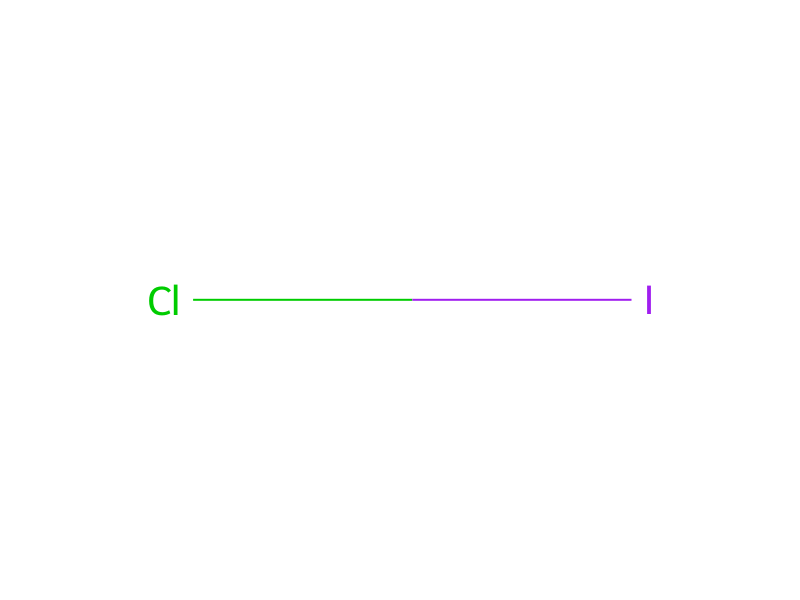
Iodine chloride → 3-(2-Fluoro-4-iodo-phenylamino)-1-methyl-1H-pyrrolo[3,2-c]pyridine-2-carboxylic acid ethyl ester
Reaction equation

[CH2:1]([O:3][C:4]([C:6]1[N:14]([CH3:15])[C:13]2[CH:12]=[CH:11][N:10]=[CH:9][C:8]=2[C:7]=1[NH:16][C:17]1[CH:22]=[CH:21][C:20]([Si](C)(C)C)=[CH:19][C:18]=1[F:27])=[O:5])[CH3:2].[I:28]Cl>C(Cl)Cl>[CH2:1]([O:3][C:4]([C:6]1[N:14]([CH3:15])[C:13]2[CH:12]=[CH:11][N:10]=[CH:9][C:8]=2[C:7]=1[NH:16][C:17]1[CH:22]=[CH:21][C:20]([I:28])=[CH:19][C:18]=1[F:27])=[O:5])[CH3:2]Participants
4
Reactant 2

Product 1

Reagents, catalysts & solvents 1

Procedure
A solution of 3-(2-fluoro-4-trimethylsilanyl-phenylamino)-1-methyl-1H-pyrrolo[3,2-c]pyridine-2-carboxylic acid ethyl ester (37.0 g, 96.0 mmol) in CH2Cl2 (500 mL) was cooled to 0-5° C. and treated dropwise with iodine monochloride solution (211 mL, 1M in CH2Cl2). The mixture was allowed to warm and stirring continued for 1 hour. The solution was washed with aqueous sodium thiosulfate solution, dried (MgSO4) and evaporated in vacuo. The resultant residue was triturated with ethyl acetate to give the title compound (21.8 g, 52%) as a yellow solid. LCMS (method B): RT=2.48 min, M+H+=440.
Workup
- temperatureto warm
- washThe solution was washed with aqueous sodium thiosulfate solution
- dry with materialdried (MgSO4)
- customevaporated in vacuo
- customThe resultant residue was triturated with ethyl acetate
Sources & evidence
- ORD record
- ord-4f9683a1d6f44084b94d4d6b6ecbc133
- Source dataset
- uspto-grants-2010_12
- Patent number
- US07855216B2
Reaction notes
Loading…