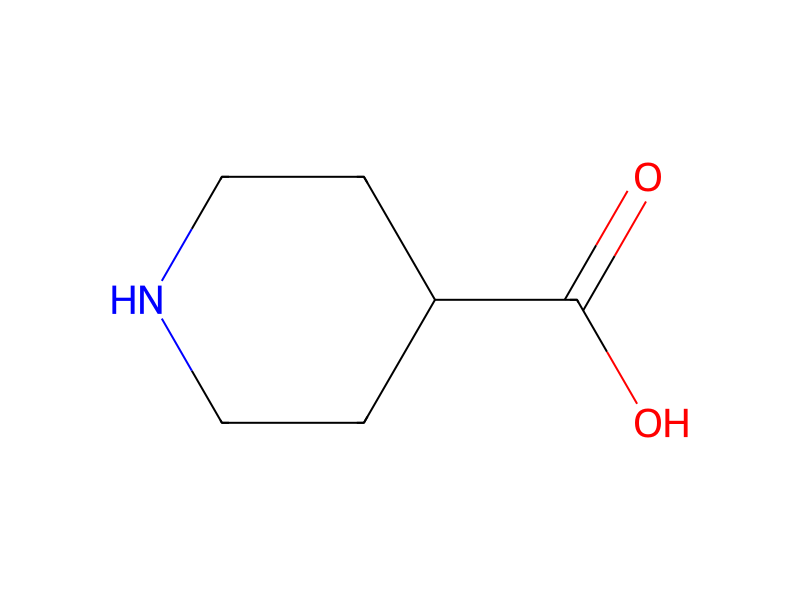
4-Piperidinecarboxylic acid → 2-(Piperidin-4-yl)-1,3-benzoxazole
Reaction equation

[NH2:1][C:2]1[CH:7]=[CH:6][CH:5]=[CH:4][C:3]=1[OH:8].[NH:9]1[CH2:14][CH2:13][CH:12]([C:15](O)=O)[CH2:11][CH2:10]1.[OH-].[K+]>O>[NH:9]1[CH2:14][CH2:13][CH:12]([C:15]2[O:8][C:3]3[CH:4]=[CH:5][CH:6]=[CH:7][C:2]=3[N:1]=2)[CH2:11][CH2:10]1Participants
5
Reactant 3


Product 1

Reagents, catalysts & solvents 1

Conditions
- Temperature
- 180 °C
Procedure
2-Aminophenol (200 mg) and 4-piperidinecarboxylic acid (236 mg) were mixed with polyphosphoric acid (1 g) and stirred with heating at 180° C. for 2 hours. After cooling to room temperature, the reaction was stopped by adding water. The filtrate was adjusted to pH 12 with 50% potassium hydroxide aqueous solution and then extracted with methylene chloride. The organic layer was washed with saturated brine and dried with magnesium sulfate, and then the solvent was evaporated under a reduced pressure to obtain the title compound 2-(4-piperidyl)benzoxazole (311.5 mg).
Workup
- temperatureAfter cooling to room temperature
- extractionextracted with methylene chloride
- washThe organic layer was washed with saturated brine
- dry with materialdried with magnesium sulfate
- customthe solvent was evaporated under a reduced pressure
Sources & evidence
- ORD record
- ord-774ab2ddc7664a708c7a7e170e2651c4
- Source dataset
- uspto-grants-2001_12
- Patent number
- US06333328B1
Reaction notes
Loading…