Diethyl disulfide → 3-Bromo-4-(ethylsulfanyl)thiophene
Reaction equation

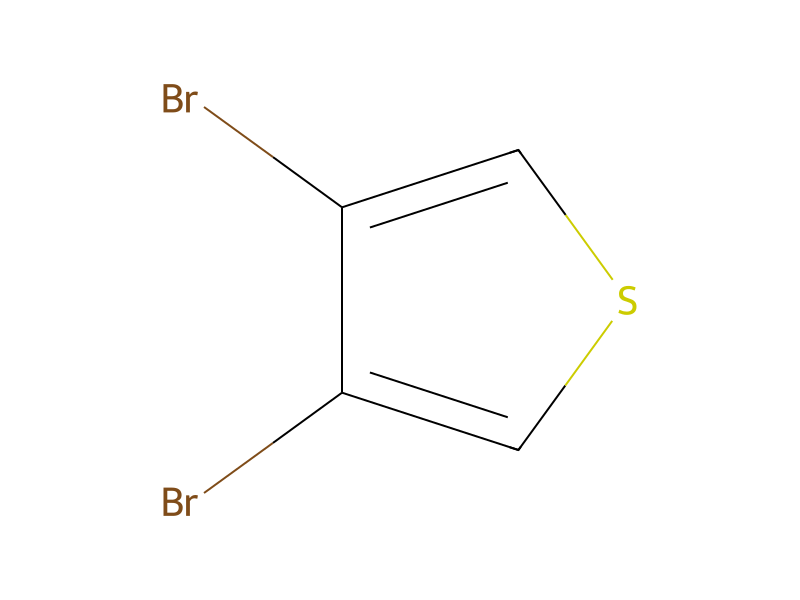
[Br:1][C:2]1[C:6](Br)=[CH:5][S:4][CH:3]=1.C([Li])CCC.[CH2:13]([S:15]SCC)[CH3:14].[OH-].[Na+]>O.C(OCC)C>[Br:1][C:2]1[C:6]([S:15][CH2:13][CH3:14])=[CH:5][S:4][CH:3]=1Participants






Conditions
- Temperature
- -70 °C
Procedure
A mixture of 9.68 g of 3,4-dibromothiophene and 80 mL of diethylether was cooled to −70° C., 27 mL of n-butyl lithium (1.63 M hexane solvent) was added over 30 minutes, and the mixture was stirred at −70° C. for 30 minutes. To the mixture was added 5.86 g of diethyl disulfide at such a rate that the internal temperature is maintained at −60° C. or less, and the mixture was stirred at −70° C. for 2 hours. The reaction mixture was heated to −35° C. and then 100 mL of water was added. After heating to room temperature, a 2 N aqueous sodium hydroxide solution was added, and the mixture was extracted with ethyl acetate. The combined organic layers were dried over anhydrous sodium sulfate and then concentrated under reduced pressure. The resulting residue was applied to a silica gel column chromatography to obtain 3.27 g of 3-bromo-4-ethylthiothiophene.
Workup
- temperatureis maintained at −60° C. or less
- stirringthe mixture was stirred at −70° C. for 2 hours
- temperatureThe reaction mixture was heated to −35° C.
- temperatureAfter heating to room temperature
- extractionthe mixture was extracted with ethyl acetate
- dry with materialThe combined organic layers were dried over anhydrous sodium sulfate
- concentrationconcentrated under reduced pressure
Sources & evidence
- ORD record
- ord-b6360ff848d04512bf8b84d6fc584cfa
- Source dataset
- uspto-grants-2015_09
- Patent number
- US09120792B2
Reaction notes
Loading…