Carbon Dioxide → (S)-4-(1-azido-2-(methylsulfonyl)ethyl)-2-ethoxy-1-methoxybenzene
Reaction equation

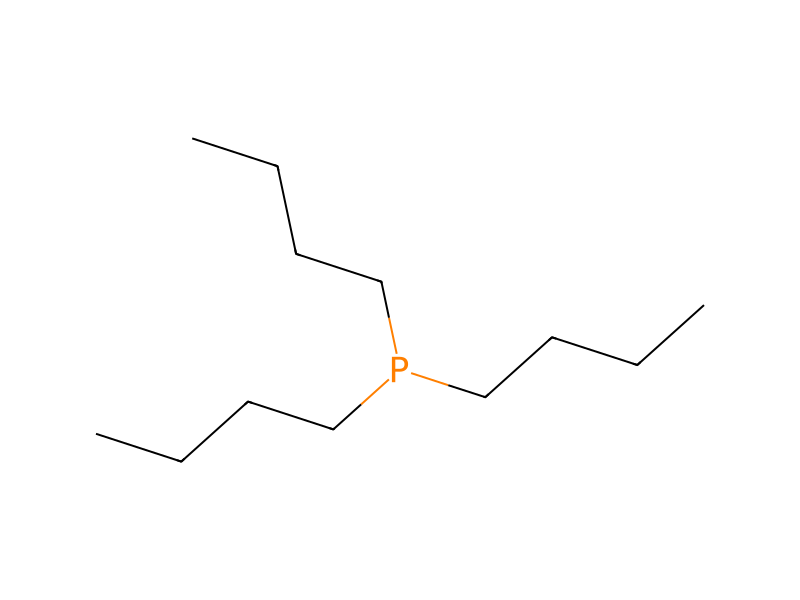
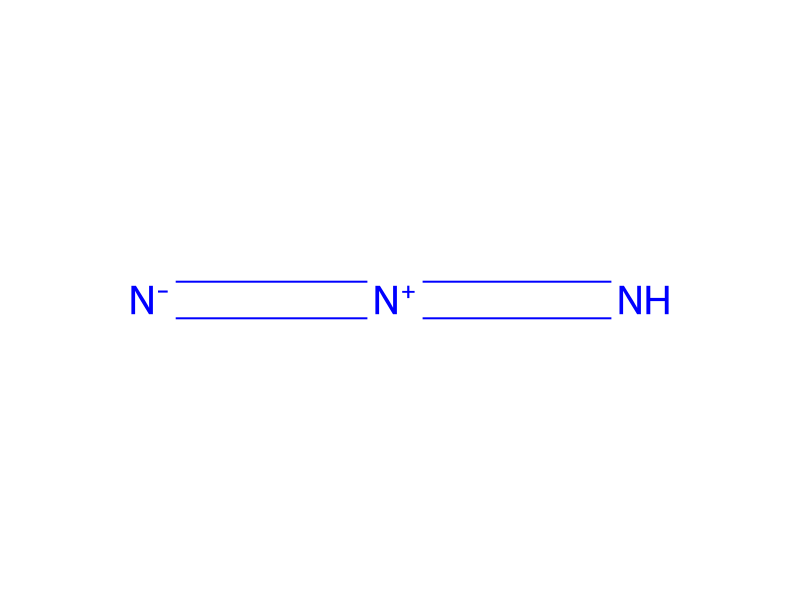
[CH2:1]([O:3][C:4]1[CH:5]=[C:6]([C@@H:12](O)[CH2:13][S:14]([CH3:17])(=[O:16])=[O:15])[CH:7]=[CH:8][C:9]=1[O:10][CH3:11])[CH3:2].[NH:19]=[N+:20]=[N-:21].C(P(CCCC)CCCC)CCC.N(C(OC(C)C)=O)=NC(OC(C)C)=O.C(=O)=O>C1(C)C=CC=CC=1.C1COCC1>[N:19]([C@@H:12]([C:6]1[CH:7]=[CH:8][C:9]([O:10][CH3:11])=[C:4]([O:3][CH2:1][CH3:2])[CH:5]=1)[CH2:13][S:14]([CH3:17])(=[O:16])=[O:15])=[N+:20]=[N-:21]Participants
Reactant 5



Product 1

Reagents, catalysts & solvents 2


Procedure
A mixture of (R)-1-(3-ethoxy-4-methoxyphenyl)-2-(methylsulfonyl)ethanol (0.94 g, 3.4 mmol) in toluene (280 mL) and THF (20 mL) was sparged with nitrogen for 15 min, and then a ˜1.1 M solution of hydrazoic acid in toluene (13.8 mL, ˜15 mmol) was added. The flask was cooled in a dry ice-acetone bath. When the internal temperature reached <−60° C., tributylphosphine (1.7 mL, 6.9 mmol), and then diisopropyl azodicarboxylate (1.6 mL, 7.9 mmol) were added. The cooling bath was charged with dry ice for the next 4 h in order to maintain the reaction temperature at <−60° C., and then the temperature was allowed to gradually rise. After 16 h, the internal temperature had climbed to −2° C. Then, silica gel (20 g) was added and the resulting slurry was evaporated. The residue was chromatographed on a silica gel column, using a hexanes-EtOAc gradient. After pooling and evaporating the appropriate fractions, the residue was triturated with heptane (25 mL) and the slurry was filtered. Solids were dried under vacuum, to provide (S)-4-(1-azido-2-(methylsulfonyl)ethyl)-2-ethoxy-1-methoxybenzene as a white solid (0.84 g, 81% yield); HPLC (Hypersil BDS C8, 5.0 μm, 250×4.6 mm, 1.5 mL/min, 278 nm, 90/10 gradient to 80/20 0.1% aqueous TFA/MeOH over 10 min then gradient to 10/90 0.1% aqueous TFA/MeOH over the next 15 min): 17.77 (99.9%); 1H NMR (DMSO-d6) δ 1.33 (t, 3H), 2.99 (s, 3H), 3.55 (dd, J=4.0, 14.7 Hz, 1H), 3.77 (s, 3H), 3.90 (dd, J=9.6, 14.7 Hz, 1H), 3.98-4.13 (m, 2H), 5.01-5.21 (m, 1H), 6.90-7.05 (m, 2H), 7.08 (s, 1H).
Workup
- customwas sparged with nitrogen for 15 min
- temperatureThe flask was cooled in a dry ice-acetone bath
- customreached <−60° C.
- temperatureto maintain the reaction temperature at <−60° C.
- customhad climbed to −2° C
- additionThen, silica gel (20 g) was added
- customthe resulting slurry was evaporated
- customThe residue was chromatographed on a silica gel column
- customevaporating the appropriate fractions
- customthe residue was triturated with heptane (25 mL)
- filtrationthe slurry was filtered
- customSolids were dried under vacuum
Sources & evidence
- ORD record
- ord-d92874e6f6e147d789123b7cc0bec880
- Source dataset
- uspto-grants-2015_09
- Patent number
- US09126906B2
Reaction notes
Loading…