Morpholine → 4-(4-Methoxybenzyloxy)-7-morpholin-4-ylquinazoline
Reaction equation

[NH:1]1[CH2:6][CH2:5][O:4][CH2:3][CH2:2]1.Br[C:8]1[CH:17]=[C:16]2[C:11]([C:12]([O:18][CH2:19][C:20]3[CH:25]=[CH:24][C:23]([O:26][CH3:27])=[CH:22][CH:21]=3)=[N:13][CH:14]=[N:15]2)=[CH:10][CH:9]=1.CC(C)([O-])C.[Na+]>C1(C)C=CC=CC=1.C1(P(C2CCCCC2)C2C=CC=CC=2C2C=CC=CC=2)CCCCC1>[CH3:27][O:26][C:23]1[CH:22]=[CH:21][C:20]([CH2:19][O:18][C:12]2[C:11]3[C:16](=[CH:17][C:8]([N:1]4[CH2:6][CH2:5][O:4][CH2:3][CH2:2]4)=[CH:9][CH:10]=3)[N:15]=[CH:14][N:13]=2)=[CH:25][CH:24]=1Participants
6
Reactant 3



Product 1

Reagents, catalysts & solvents 2

Procedure
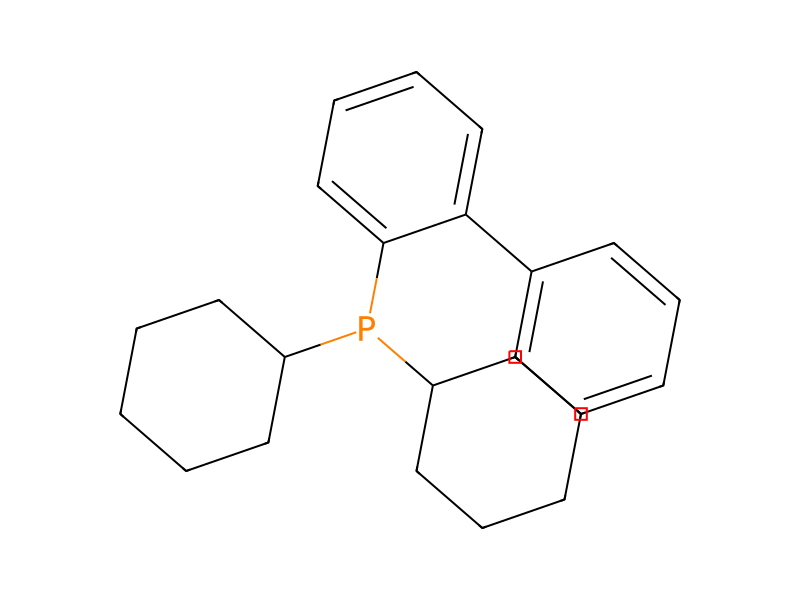
Under a nitrogen atmosphere, 2.82 g (12.5 mmol) of tris(dibenzylideneacetone)dipalladium-(0) and 5.41 g (15.1 mmol) of 2-(dicyclohexylphosphino)biphenyl were dissolved in 1.5 l of toluene, and 269.0 ml (3.1 mol) of morpholine and 213.0 g (0.62 mol) of 7-bromo-4-(4-methoxybenzyloxy)quinazoline [dissolved in 2 l of toluene] were added successively. 73.0 g (0.8 mol) of sodium tert-butoxide were subsequently added in portions, and the mixture was stirred. Conventional work-up gave 178 g of 4-(4-methoxybenzyloxy)-7-morpholin-4-ylquinazoline; HPLC/MS (M+H)+=350 as oil [crude product; was reacted further directly].
Sources & evidence
- ORD record
- ord-0d629ce062d145f8862213d1f871a825
- Source dataset
- uspto-grants-2015_09
- Patent number
- US09126952B2
Reaction notes
Loading…