Boron tribromide → 3-(5-(3-Carbazol-9-ylphenyl)-1,3,4-oxadiazol-2-yl)phenol
Reaction equation

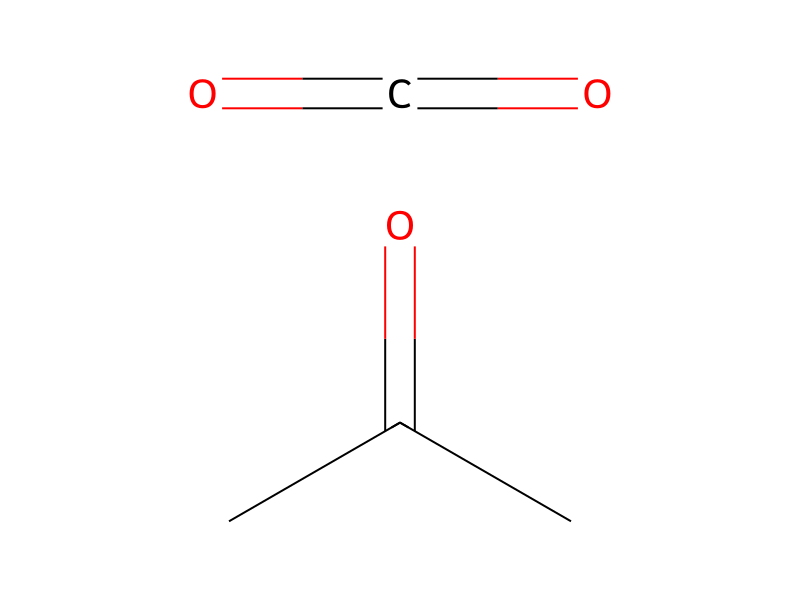
[CH:1]1[C:13]2[N:12]([C:14]3[CH:15]=[C:16]([C:20]4[O:21][C:22]([C:25]5[CH:30]=[CH:29][CH:28]=[C:27]([O:31]C)[CH:26]=5)=[N:23][N:24]=4)[CH:17]=[CH:18][CH:19]=3)[C:11]3[C:6](=[CH:7][CH:8]=[CH:9][CH:10]=3)[C:5]=2[CH:4]=[CH:3][CH:2]=1.B(Br)(Br)Br.C(=O)=O.CC(C)=O>ClCCl>[CH:10]1[C:11]2[N:12]([C:14]3[CH:15]=[C:16]([C:20]4[O:21][C:22]([C:25]5[CH:26]=[C:27]([OH:31])[CH:28]=[CH:29][CH:30]=5)=[N:23][N:24]=4)[CH:17]=[CH:18][CH:19]=3)[C:13]3[C:5](=[CH:4][CH:3]=[CH:2][CH:1]=3)[C:6]=2[CH:7]=[CH:8][CH:9]=1Participants




Procedure
To a solution of 2-(3-carbazol-9-ylphenyl)-5-(3-methoxyphenyl)-1,3,4-oxadiazole (3.0 g, 72 mmol) in dichloromethane (20.0 ml) was dropwise added BBr3 (30.0 ml, 1M in dichloromethane) at −78° C. (dry-ice/acetone) under nitrogen. After addition of BBr3 solution, the reaction was taken to room temperature and kept at room temperature for 6 h. The reaction mixture was poured into ice-water (100.0 ml). Dichloromethane was evaporated under reduced pressure. The white solid was collected by filtration. After drying under vacuum, product as white solid was obtained in 2.9 g (100%) yield. 1H NMR (400 MHz, acetone-d6, δ): 8.89 (s, br, 1H, OH), 8.41 (m, 1H), 8.34 (m, 1H), 8.26 (m, 2H), 7.92 (m, 2H), 7.66 (m, 2H), 7.53-7.41 (m, 5H), 7.33 (m, 2H), 7.10 (m, 1H). MS-EI (m/z): [M]+ calcd for C26H17N3O2, 403.1. found 403.1.
Workup
- customat −78° C.
- customwas taken to room temperature
- customDichloromethane was evaporated under reduced pressure
- filtrationThe white solid was collected by filtration
- customAfter drying under vacuum
- customproduct as white solid was obtained in 2.9 g (100%)
- customyield
Sources & evidence
- ORD record
- ord-242930cb035c4feaa4f0c270dc7b3e54
- Source dataset
- uspto-grants-2015_09
- Patent number
- US09133177B2
Reaction notes
Loading…