Orotic Acid → HCID 66996102, compound
Reaction equation

[NH:1]1[CH2:5][CH2:4][C@H:3](/[CH:6]=[CH:7]/[C:8]2[CH:9]=[N:10][CH:11]=[N:12][CH:13]=2)[CH2:2]1.[C:14]([OH:24])(=[O:23])[C:15]1[NH:22][C:20](=[O:21])[NH:19][C:17](=[O:18])[CH:16]=1>C(#N)C>[C:14]([OH:24])(=[O:23])[C:15]1[NH:22][C:20](=[O:21])[NH:19][C:17](=[O:18])[CH:16]=1.[NH:1]1[CH2:5][CH2:4][C@H:3](/[CH:6]=[CH:7]/[C:8]2[CH:13]=[N:12][CH:11]=[N:10][CH:9]=2)[CH2:2]1Participants
4
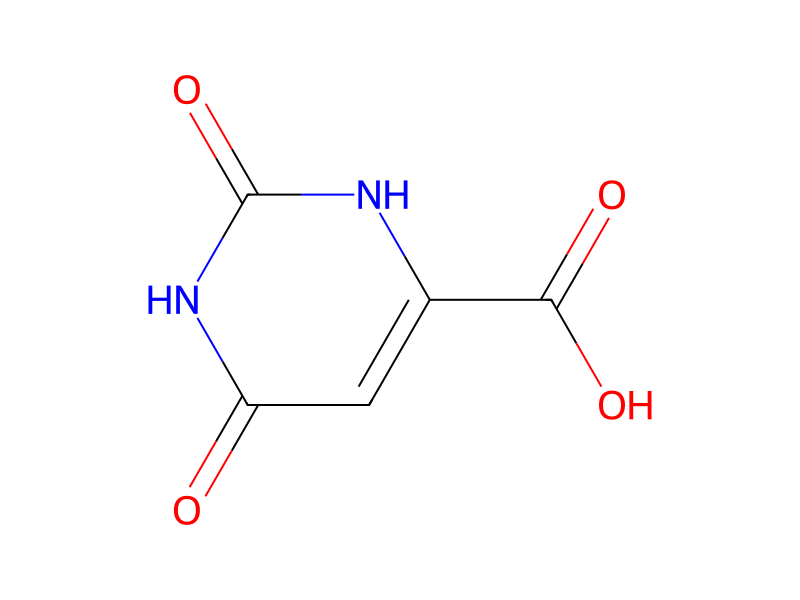


Reagents, catalysts & solvents 1

Conditions
- Temperature
- 50 °C
Procedure
(R)-5-((E)-2-pyrrolidin-3-ylvinyl)pyrimidine free base (189 mg, 1.077 mmol, freshly prepared) was dissolved in acetonitrile (5 ml). The solution was then treated with 1.1 eq. of an orotic acid solution (1 M in ethanol) at ambient temperature. The mixture was warmed up to 50° C. and cooled down slowly to ambient temperature overnight. The solid obtained was filtered and dried under suction before being analysed by XRPD, and 1H-NMR. The XRPD diffractogram of (R)-5-((E)-2-pyrrolidin-3-ylvinyl)pyrimidine mono-orotate Form I is shown in FIG. 6.
Workup
- temperaturecooled down slowly to ambient temperature overnight
- customThe solid obtained
- filtrationwas filtered
- customdried under suction
Sources & evidence
- ORD record
- ord-4b3157c0f234442e81b45b0281f03d44
- Source dataset
- uspto-grants-2015_09
- Patent number
- US09145396B2
Reaction notes
Loading…