Carbamate → Carbanilide
Reaction equation

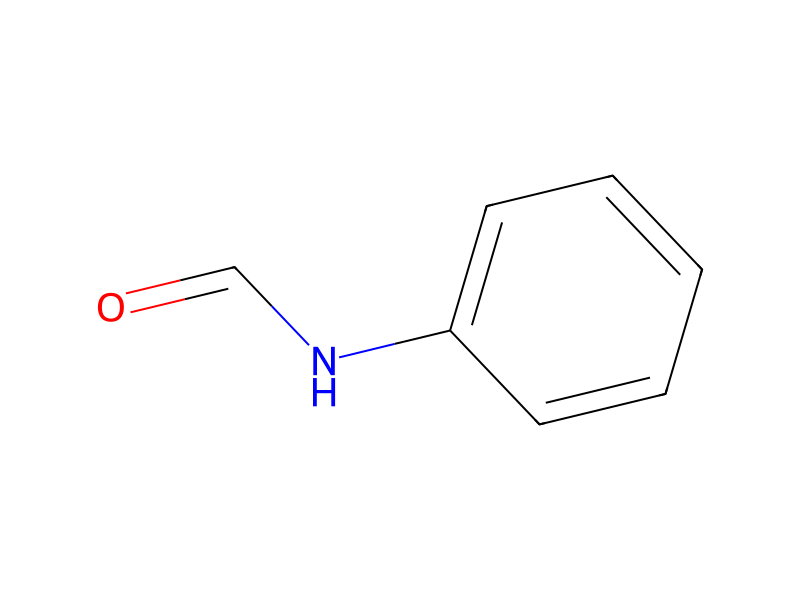
[N+:1]([C:4]1[CH:9]=[CH:8][CH:7]=[CH:6][CH:5]=1)([O-])=O.C(=O)([O-])N.[CH:14]([NH:16][C:17]1[CH:22]=[CH:21][CH:20]=[CH:19][CH:18]=1)=[O:15]>>[C:4]1([NH:1][C:14]([NH:16][C:17]2[CH:22]=[CH:21][CH:20]=[CH:19][CH:18]=2)=[O:15])[CH:9]=[CH:8][CH:7]=[CH:6][CH:5]=1Participants



Procedure
In a separate run, the foregoing procedure is repeated except that the charge to the reactor additionally contains 4.0 grams of nitrobenzene. After 19 hours of reaction at a temperature of 180° C. and a CO pressure of 1000 psig, analysis of the reactor effluent from this second run shows methyl-N-phenyl carbamate to be formed in a yield of only 100%, based on cobalt charged, with a selectivity to a carbamate of only 50%, based on cobalt charged. The balance of products is found to comprise predominantly formanilide, with a minor quantity of diphenyl urea also being formed. There is also observed to be formed during the reaction a precipitate comprising Co(OH)2, resulting from the reaction of cobalt with water which is formed in the reaction mixture from --NO2 moieties in the system. The water therefore adversely combines with the cobalt carbonyl and removes the desired catalyst from the reaction.
Workup
- customAfter 19 hours of reaction at a temperature of 180° C.
- customto be formed in a yield of only 100%
- additioncharged
Sources & evidence
- ORD record
- ord-33461562b2474f99a8f737213db70635
- Source dataset
- uspto-grants-1981_05
- Patent number
- US04266070
Reaction notes
Loading…