Propylene → Propylene Vinylethylene Carbonate
Reaction equation

[CH2:1]=[CH:2][CH3:3].[C:4](=[O:7])([OH:6])[OH:5].[CH:8]([CH:10]=[CH2:11])=[CH2:9]>>[CH2:1]=[CH:2][CH3:3].[C:4]1(=[O:6])[O:5][CH2:11][CH:10]([CH:8]=[CH2:9])[O:7]1Participants
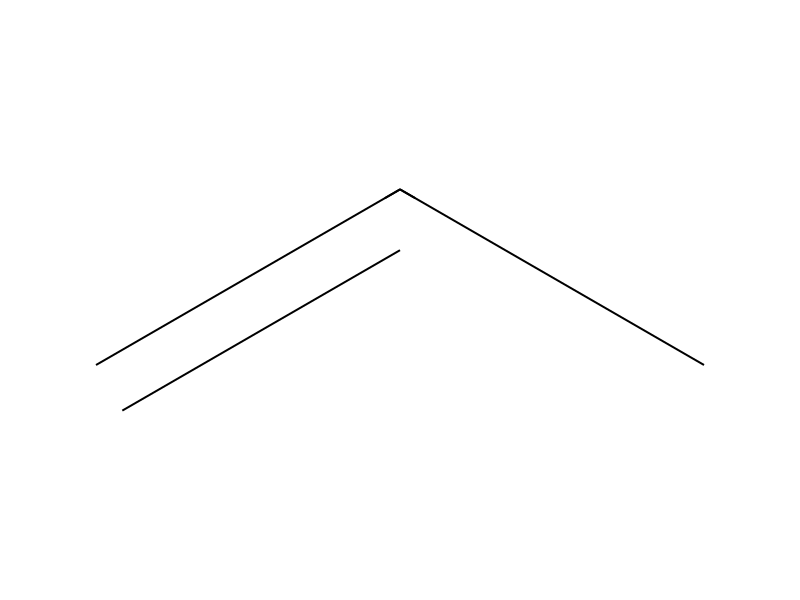


Conditions
- Temperature
- 23 °C
Procedure
A 200 mL flame dried pear-shaped Schlenk flask equipped with a magnetic stir bar and capped with a septum was charged with (2,6-di-isopropylphenylimino)-1,4-dithiane Pd(II) catalyst XII (100 mg) in an argon filled glove box. Upon removal from the glove box, the flask was evacuated and backfilled with propylene. The catalyst was dissolved in CH2Cl2 (20 mL) and immediately treated with vinyl ethylene carbonate (5 mL). The resulting orange solution was stirred at 23° C. under a propylene atmosphere (1 atm) for 20 hours. A small amount of polymer had precipitated out of solution. The polymerization was quenched with MeOH and acetone leaving oil adhering to the walls of the flask. The polymer was washed several times with acetone and MeOH to remove any remaining monomer. The polymer was dissolved in CH2Cl2 and transferred to a storage jar. The solvent was left to evaporate and the resulting oily polymer was dried in vacuo at ~80° C. for 2 days to afford a tacky solid (0.8 g, 284 TO). 1H NMR was consistent with a copolymer containing approximately 91.9 weight % propylene and 8.1 weight % vinyl ethylene carbonate monomer units.; Mn 4000 g /mol ; Mw 8110 g /mol.
Workup
- temperatureA 200 mL flame dried pear-shaped Schlenk flask
- customequipped with a magnetic stir bar
- customcapped with a septum
- customUpon removal from the glove box
- customthe flask was evacuated
- dissolutionThe catalyst was dissolved in CH2Cl2 (20 mL)
- additionimmediately treated with vinyl ethylene carbonate (5 mL)
- customA small amount of polymer had precipitated out of solution
- customThe polymerization was quenched with MeOH and acetone leaving oil adhering to the walls of the flask
- washThe polymer was washed several times with acetone and MeOH
- customto remove any remaining monomer
- dissolutionThe polymer was dissolved in CH2Cl2
- waitThe solvent was left
- customto evaporate
- customthe resulting oily polymer was dried in vacuo at ~80° C. for 2 days
- customto afford a tacky solid (0.8 g, 284 TO)
Sources & evidence
- ORD record
- ord-8a628d8b3b5844de8be5dbec59377e73
- Source dataset
- uspto-grants-2000_07
- Patent number
- US06090900
Reaction notes
Loading…