Ethylene → Ethylene styrene
Reaction equation

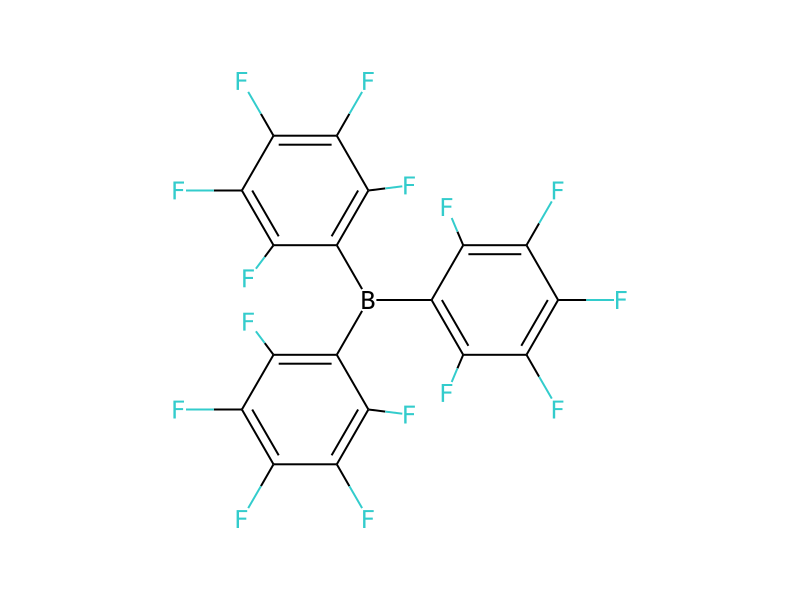
[CH2:1]=[CH:2][C:3]1[CH:8]=[CH:7][CH:6]=[CH:5][CH:4]=1.C=C.FC1C(B(C2C(F)=C(F)C(F)=C(F)C=2F)C2C(F)=C(F)C(F)=C(F)C=2F)=C(F)C(F)=C(F)C=1F.[H][H]>[Ti].CCC(C)C.C1CCCCC1>[CH2:1]=[CH2:2].[CH2:1]=[CH:2][C:3]1[CH:8]=[CH:7][CH:6]=[CH:5][CH:4]=1Participants






Procedure
The ESI 4 interpolymer was prepared in a 400 gallon(1514 L) agitated semi-continuous batch reactor. The reaction mixture consisted of approximately 250 gallons (946 L) of solvent comprising a mixture of cyclohexane (85 wt percent) and isopentane (15 wt percent), and styrene. Prior to addition, solvent, styrene and ethylene were purified to remove water and oxygen. The inhibitor in the styrene was also removed. Inerts were removed by purging the vessel with ethylene. The vessel was then pressure controlled to a set point with ethylene. Hydrogen was added to control molecular weight. Temperature in the vessel was controlled to set-point by varying the jacket water temperature on the vessel. Prior to polymerization, the vessel was heated to the desired run temperature and the catalyst components Titanium: (N-1,1-dimethylethyl)dimethyl(1-(1,2,3,4,5-eta)-2,3,4,5-tetramethyl-2,4-cyclopentadien-1-yl)silanaminato))(2-)N)-dimethyl, CAS# 135072-62-7 and Tris(pentafluorophenyl)boron, CAS# 001109-15-5, Modified methylaluminoxane Type 3A, CAS# 146905-79-5 were flow controlled, on a mole ratio basis of 1/3/5 respectively , combined and added to the vessel. After starting, the polymerization was allowed to proceed with ethylene supplied to the reactor as required to maintain vessel pressure. In some cases, hydrogen was added to the headspace of the reactor to maintain a mole ratio with respect to the ethylene concentration. At the end of the run, the catalyst flow was stopped, ethylene was removed from the reactor, about 1000 ppm of Irganox™ 1010 anti-oxidant (trademark of Ciba Geigy Corp.) was then added to the solution and the polymer was isolated from the solution. The resulting polymers were isolated from solution by either stripping with steam in a vessel or by use of a devolatilizing extruder. In the case of the steam stripped material, additional processing was required in extruder like equipment to reduce residual moisture and any unreacted styrene. The specific preparation conditions for the interpolymer are summarized in Table 2 and the properties in Table 3.
Workup
- customThe ESI 4 interpolymer was prepared in a 400 gallon(1514 L)
- customwere purified
- customto remove water and oxygen
- customThe inhibitor in the styrene was also removed
- customInerts were removed
- customby purging the vessel with ethylene
- additionHydrogen was added
- customPrior to polymerization
- temperaturethe vessel was heated to the desired run temperature
- additionadded to the vessel
- temperatureto maintain vessel pressure
- temperatureto maintain a mole ratio with respect
- concentrationto the ethylene concentration
- customethylene was removed from the reactor, about 1000 ppm of Irganox™ 1010 anti-oxidant (trademark of Ciba Geigy Corp.)
- additionwas then added to the solution
- customthe polymer was isolated from the solution
- customThe resulting polymers were isolated from solution by either stripping with steam in a vessel or by use of a devolatilizing extruder
- customThe specific preparation conditions for the interpolymer
Sources & evidence
- ORD record
- ord-4c863ef8ee724657b3383a2d2b5a3d02
- Source dataset
- uspto-grants-2000_07
- Patent number
- US06093752
Reaction notes
Loading…