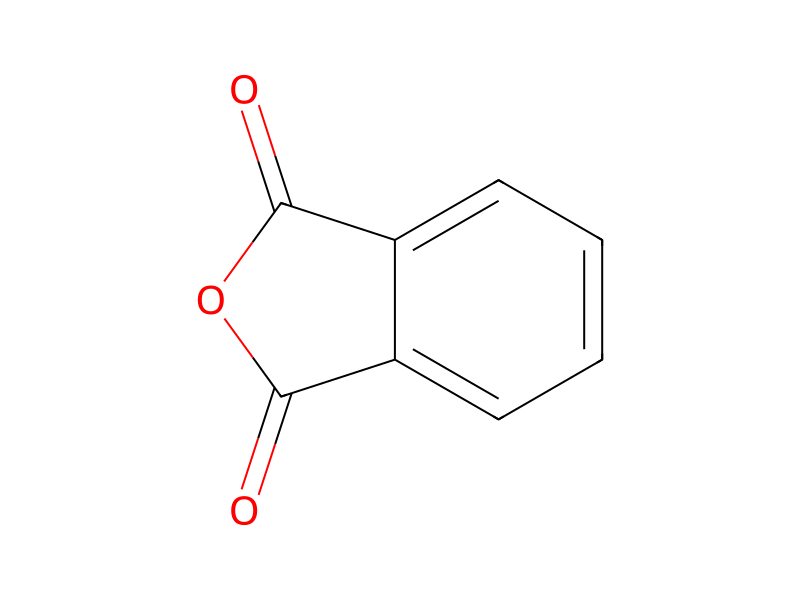
Phthalic Anhydride → HCID 615346, compound
Reaction equation

[NH2:1][C:2]1[CH:3]=[CH:4][CH:5]=[C:6]2[C:11]=1[N:10]=[CH:9][CH:8]=[CH:7]2.[C:12]1(=O)[O:17][C:15](=[O:16])[C:14]2=[CH:18][CH:19]=[CH:20][CH:21]=[C:13]12>>[C:12]1(=[O:17])[N:1]([C:2]2[CH:3]=[CH:4][CH:5]=[C:6]3[C:11]=2[N:10]=[CH:9][CH:8]=[CH:7]3)[C:15](=[O:16])[C:14]2=[CH:18][CH:19]=[CH:20][CH:21]=[C:13]12Participants


Procedure
Referring to the above equations, the starting 8-aminoquinoline I was treated with phthalic anhydride to give the 8-phthalimidoquinoline II. This was necessary to provide protection for the 8-amino group during peroxidation and introduction of the 2-chloro group. Thus compound II was treated with MCPBA, followed by chromatography over basic alumina to afford the 1-oxide III. Intermediate III was treated directly (preferred procedure) with phosphorus oxychloride to afford the 2-chloro derivative V. However, it was discovered also that treatment of the reaction mixture from the oxidation step with a combination of basic and neutral alumina gave the 2-quinolone IV which was converted also with phosphorus oxychloride to give the 2-chloro derivative V, albeit in lower yield.
Sources & evidence
- ORD record
- ord-767f6f9033914cce977e99064030ae59
- Source dataset
- uspto-grants-1986_10
- Patent number
- US04617394
Reaction notes
Loading…