Chloroacetyl chloride → HCID 21279600, compound
Reaction equation

C(NCCO)C.[Cl:7][CH2:8][C:9](Cl)=[O:10].[C:12](=[O:15])([O-])[O-:13].[Na+].[Na+].[Cl:18][CH2:19][C:20]([N:22]([CH2:26]C)[CH2:23][CH2:24]O)=[O:21]>C(#N)C>[Cl:18][CH2:19][C:20]([N:22]([CH2:23][CH3:24])[CH2:26][CH:12]([O:15][C:9](=[O:10])[CH2:8][Cl:7])[OH:13])=[O:21]Participants

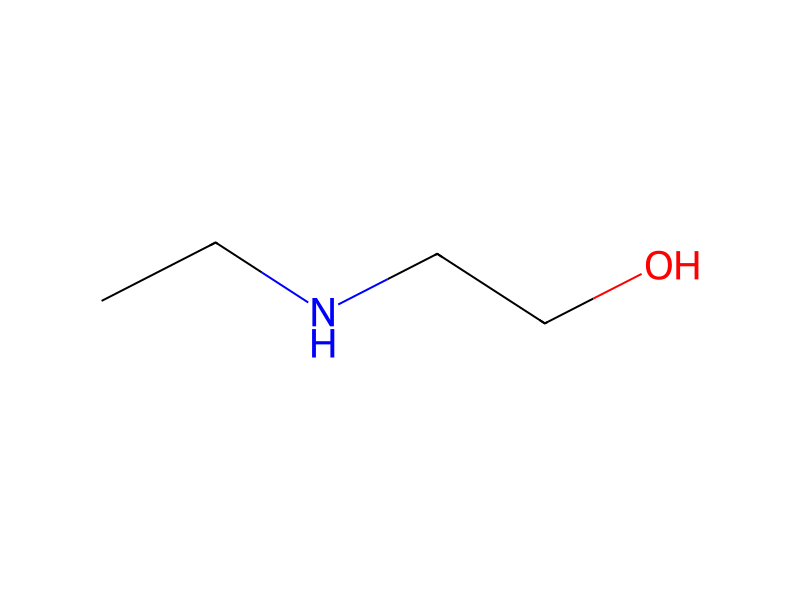




Procedure
N-chloroacetyl-N-ethyl-2-chloroacetoxyethanolamine was prepared in one step from N-ethylethanolamine (8.9 g., 0.1 mole) and chloroacetylchloride (97 g., 1 mole) in dry acetonitrile (100 ml) and anhydrous sodium carbonate (1.19 g., 0.11 mole) by mixing at room temperature for 48 hours. The resulting product was produced in an 80% yield following the same work-up procedure as described for N-chloroacetyl-N-ethylethanolamine in Example 1. The product shows the same behavior in the NMR spectrum in COCl3 as in N-chloroacetyl-N-ethyl-2acetoxyethanolamine due to the following equilibrium: ##STR20## Therefore, δCDCl3ppm : 4.35 (t, CH2 --O); 4.17, 4.125 ##STR21## two overlapping doublets); 3.8-3.25 (m, CH2 --N--CH2); 1.23 (q, --CH3, e.g., two overlapping triplets). m=multiplet, q=quarter, t=triplet
Workup
- additionby mixing at room temperature for 48 hours
- customThe resulting product was produced in an 80% yield
Sources & evidence
- ORD record
- ord-a91a8f505b0e432b91b14993fe928dd5
- Source dataset
- uspto-grants-1989_01
- Patent number
- US04795627
Reaction notes
Loading…