Dicyclohexylcarbodiimide → L-Isoleucine
Reaction equation

C(CN1CCC[C@H]1C(N(CC1C=CC=CC=1)[C:10](=[O:17])[C@H:11]([C@H:13]([CH2:15][CH3:16])[CH3:14])[NH2:12])=O)(O)=O.C1(N=C=NC2CCCCC2)CCCCC1.CC(C)=CCC/C(/C)=C/CC/C(/C)=C/C[OH:55]>ClCCl>[NH2:12][C@H:11]([C:10]([OH:17])=[O:55])[C@H:13]([CH2:15][CH3:16])[CH3:14]Participants
5
Reactant 3



Product 1
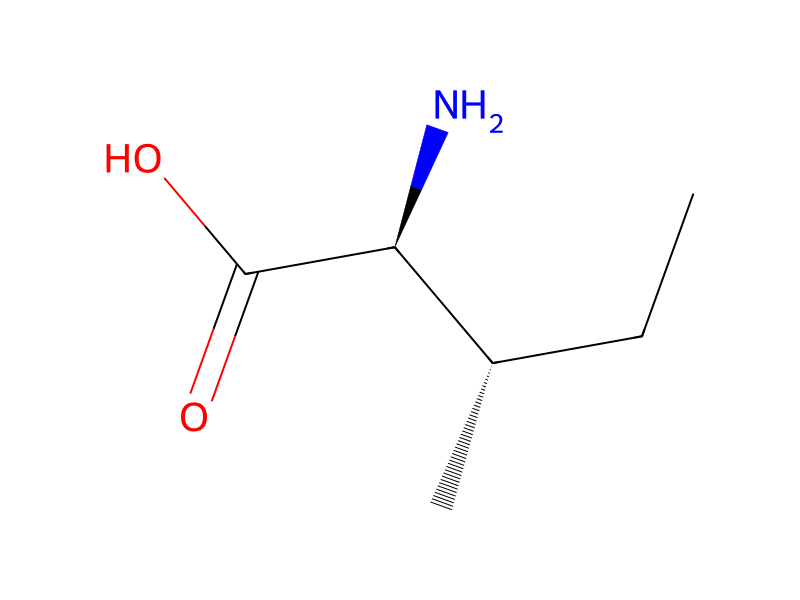
Reagents, catalysts & solvents 1

Procedure
A solution of L-isoleucine, N-[1-(carboxymethyl)-L-prolyl] benzylamide (67 mg, 0.18 mmol), 4-N,N-dimethylaminopyridine (6.1 mg, 0.05 mmol, 0.3 eq), 1,3-dicyclohexylcarbodiimide (64 mg, 0.31 mmol, 1.8 eq) in dichloromethane (2.0 mL) was treated with trans,trans farnesol (55 uL, 0.22 mmol, 1.2 eq). After TLC indicated the reaction was complete, the mixture was purified by HPLC to provide 27 mg (26%) of L-isoleucine, N-[1-(2-[1-(3,7,11-trimethyldodeca-2,6,10-trien-1-ol)]-2-oxoethyl)-L-proline] benzylamide.
Workup
- customthe mixture was purified by HPLC
Sources & evidence
- ORD record
- ord-be5989ac63444d0b82f64c87545c25a9
- Source dataset
- uspto-grants-1997_11
- Patent number
- US05686424
Reaction notes
Loading…