Ethyl (2-chloroacetyl)carbamate → (7-Chloro-imidazo[1,2-c]pyrimidin-2-yl)-carbamic acid ethyl ester
Reaction equation

[NH2:1][C:2]1[N:7]=[CH:6][N:5]=[C:4]([Cl:8])[CH:3]=1.Cl[CH2:10][C:11]([NH:13][C:14]([O:16][CH2:17][CH3:18])=[O:15])=O>CN1CCN(C)C1=O>[CH2:17]([O:16][C:14](=[O:15])[NH:13][C:11]1[N:1]=[C:2]2[CH:3]=[C:4]([Cl:8])[N:5]=[CH:6][N:7]2[CH:10]=1)[CH3:18]Participants
4


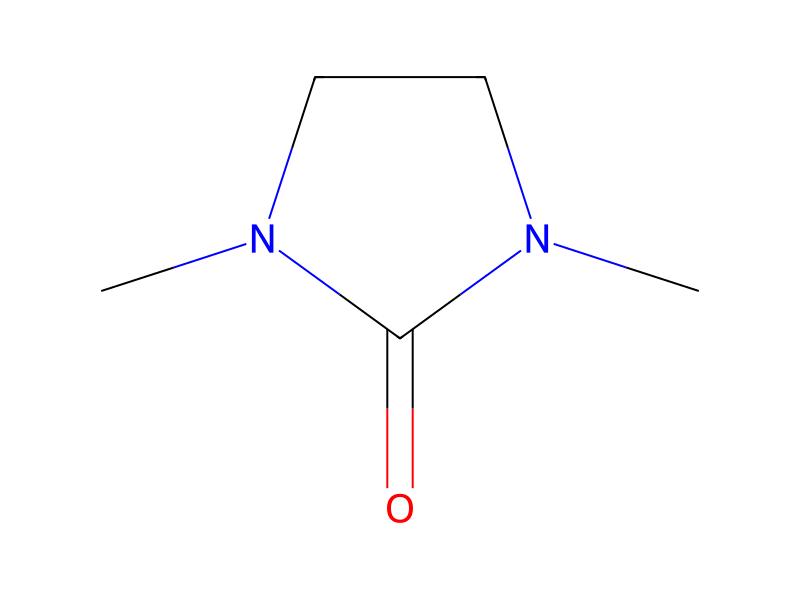
Conditions
- Temperature
- 130 °C
Procedure
A solution of 6-amino-4-chloropyrimidine (1) (0.504 g, 3.89 mmol) and N-chloroacetylurethane (0.770 g, 4.65 mmol) in 1,3-dimethyl-2-imidazolidinone (10 mL) was heated to 130° C. under nitrogen for 3 h. N-Chloroacetylurethane (0.770 g, 4.65 mmol) was added and the mixture was heated to 130° C. under nitrogen for a further 3.5 h. The black oily solution was poured onto ice (200 g) and the aqueous solution was extracted with ethyl acetate (3×250 mL). The organic fractions were combined, removal of solvent in vacuo gave an oily solid which was triturated with ether. Filtration of the solid and washing with ether gave urethane (2) (88 mg, 9%) as a solid. APCI-MS Found [M+H]+=241, 243.
Workup
- additionThe black oily solution was poured onto ice (200 g)
- extractionthe aqueous solution was extracted with ethyl acetate (3×250 mL)
- customremoval of solvent in vacuo
- customgave an oily solid which
- customwas triturated with ether
- filtrationFiltration of the solid
- washwashing with ether
Sources & evidence
- ORD record
- ord-784c24e7e9484ec087a016e91ccf7e1d
- Source dataset
- uspto-grants-2009_07
- Patent number
- US07563788B2
Reaction notes
Loading…