4-Methylmorpholine → Methyl 4-(4-{4-[(methylsulfonyl)amino]phenyl}(1,3-thiazol-2-yl))-5-methylthiothiophene-2-carboxylate
Reaction equation

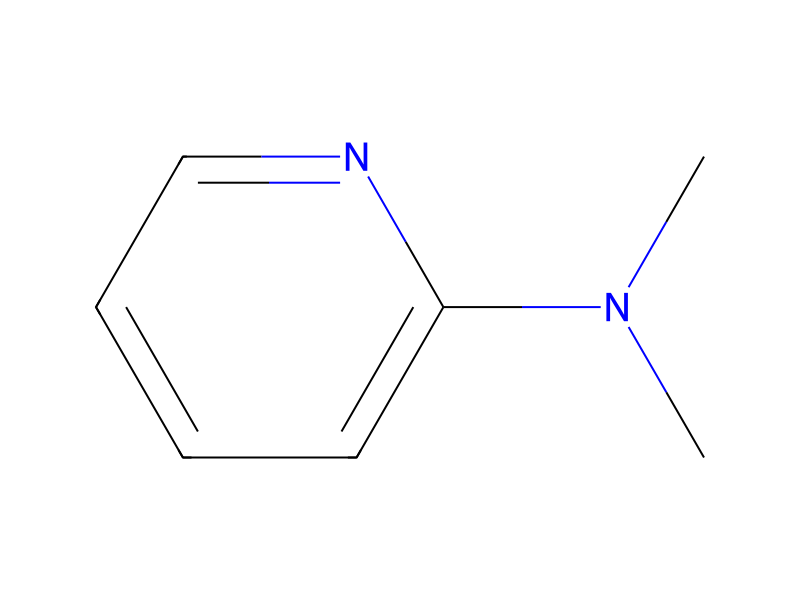
[NH2:1][C:2]1[CH:7]=[CH:6][C:5]([C:8]2[N:9]=[C:10]([C:13]3[CH:14]=[C:15]([C:19]([O:21][CH3:22])=[S:20])[S:16][C:17]=3[CH3:18])[S:11][CH:12]=2)=[CH:4][CH:3]=1.CN1CCOCC1.CN(C1C=CC=CN=1)C.[CH3:39][S:40](Cl)(=[O:42])=[O:41]>ClCCl>[CH3:39][S:40]([NH:1][C:2]1[CH:7]=[CH:6][C:5]([C:8]2[N:9]=[C:10]([C:13]3[CH:14]=[C:15]([C:19]([O:21][CH3:22])=[S:20])[S:16][C:17]=3[CH3:18])[S:11][CH:12]=2)=[CH:4][CH:3]=1)(=[O:42])=[O:41]Participants
Reactant 4



Product 1

Reagents, catalysts & solvents 1

Procedure
Methyl 4-(4-(4-aminophenyl)(1,3-thiazol-2-yl))-5-methylthiothiophene-2-carboxylate (200 mg, 0.55 mmol) was dissolved in dry dichloromethane (20 mL). To this, N-methyl morpholine (150 μL, 1.38 mmol) and dimethylaminopyridine (6.1 mg, 0.055 mmol) were added, the mixture was cooled on an ice bath, and methanesulfonyl chloride (43 μL, 0.55 mmol) was added dropwise. The mixture was then stirred for 8 days at room temperature. The mixture was partitioned between saturated sodium bicarbonate (50 mL) and dichloromethane (20 mL). The aqueous layer was extracted with dichloromethane (3×20 mL), and the combined organic layers were washed with saturated sodium bicarbonate (20 mL), brine (2×20 mL), and dried over anhydrous sodium sulfate. The solvent was remove in vacuo. Column chromatrography on silica gel (100 g) eluting with dichloromethane:methanol 99/1 (v:v), gave methyl 4-(4-{4-[(methylsulfonyl)amino]phenyl}(1,3-thiazol-2-yl))-5-methylthiothiophene-2-carboxylate (155 mg, 64%) as a solid. 1H-NMR (DMSO-d6; 300 MHz) δ9.92 (s, 1H), 8.22 (s, 1H), 8.11 (s, 1H), 8.40 and 6.90 (AB quartet, 2H, J=8.7 Hz), 3.87 (s, 3H), 3.05 (s, 3H), 2.76 (s, 3H). Mass spectrum (MALDI-TOF, CHCA matrix m/z): Calcd. for C17H16N2O4S4441.0 (M+H), found 441.2.
Workup
- temperaturethe mixture was cooled on an ice bath
- customThe mixture was partitioned between saturated sodium bicarbonate (50 mL) and dichloromethane (20 mL)
- extractionThe aqueous layer was extracted with dichloromethane (3×20 mL)
- washthe combined organic layers were washed with saturated sodium bicarbonate (20 mL), brine (2×20 mL)
- dry with materialdried over anhydrous sodium sulfate
- customThe solvent was remove in vacuo
- washColumn chromatrography on silica gel (100 g) eluting with dichloromethane
Sources & evidence
- ORD record
- ord-c11afe14e695494ca923dddca9f4c89f
- Source dataset
- uspto-grants-2002_12
- Patent number
- US06492403B1
Reaction notes
Loading…