Phenylacetyl chloride → 3-(4-Chlorophenyl)-3-(2-phenylacetamido)propanoic acid
Reaction equation

[NH2:1][CH:2]([C:7]1[CH:12]=[CH:11][C:10]([Cl:13])=[CH:9][CH:8]=1)[CH2:3][C:4]([OH:6])=[O:5].[OH-].[Na+].[C:16]1([CH2:22][C:23](Cl)=[O:24])[CH:21]=[CH:20][CH:19]=[CH:18][CH:17]=1>O1CCOCC1>[Cl:13][C:10]1[CH:9]=[CH:8][C:7]([CH:2]([NH:1][C:23](=[O:24])[CH2:22][C:16]2[CH:21]=[CH:20][CH:19]=[CH:18][CH:17]=2)[CH2:3][C:4]([OH:6])=[O:5])=[CH:12][CH:11]=1Participants
5
Reactant 3
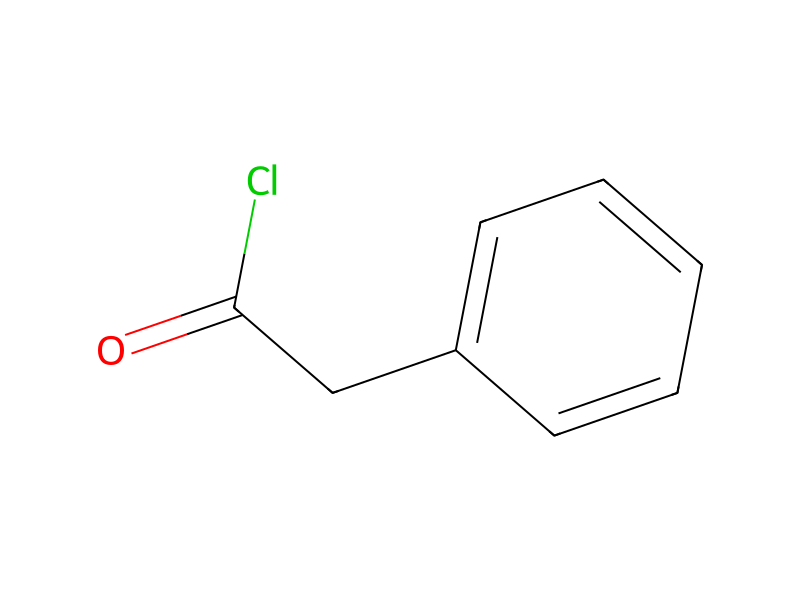


Product 1

Reagents, catalysts & solvents 1

Procedure
9.6 g of 3-amino-3-(4-chlorophenyl)propionic acid are dissolved in 200 ml of dioxane and about 50 ml of 1N NaOH in order to reach pH=10.5-11.5. The medium is cooled to +5° C. and 6.34 ml of phenylacetyl chloride are then gradually added, while maintaining the mixture at pH=10.5-11.5 and at a temperature of between +5° C. and +10° C.. Stirring is continued for 1 and a half hours and the medium is then concentrated to one-half before diluting with 500 ml of water. The resulting mixture is washed twice with EtOAc and then acidified to pH=1-2 by addition of 6N HCl The solid is drained, washed with water and dried to give 14 g of the expected compound.
Workup
- temperatureThe medium is cooled to +5° C.
- temperaturewhile maintaining the mixture at pH=10.5-11.5
- customat a temperature of between +5° C. and +10° C.
- customis continued for 1 and a half hours
- concentrationthe medium is then concentrated to one-half
- additionbefore diluting with 500 ml of water
- washThe resulting mixture is washed twice with EtOAc
- additionacidified to pH=1-2 by addition of 6N HCl The solid
- washwashed with water
- customdried
Sources & evidence
- ORD record
- ord-e075f819667e4270bb4faec3e688c26e
- Source dataset
- uspto-grants-2002_08
- Patent number
- US06433185B1
Reaction notes
Loading…